
About this site
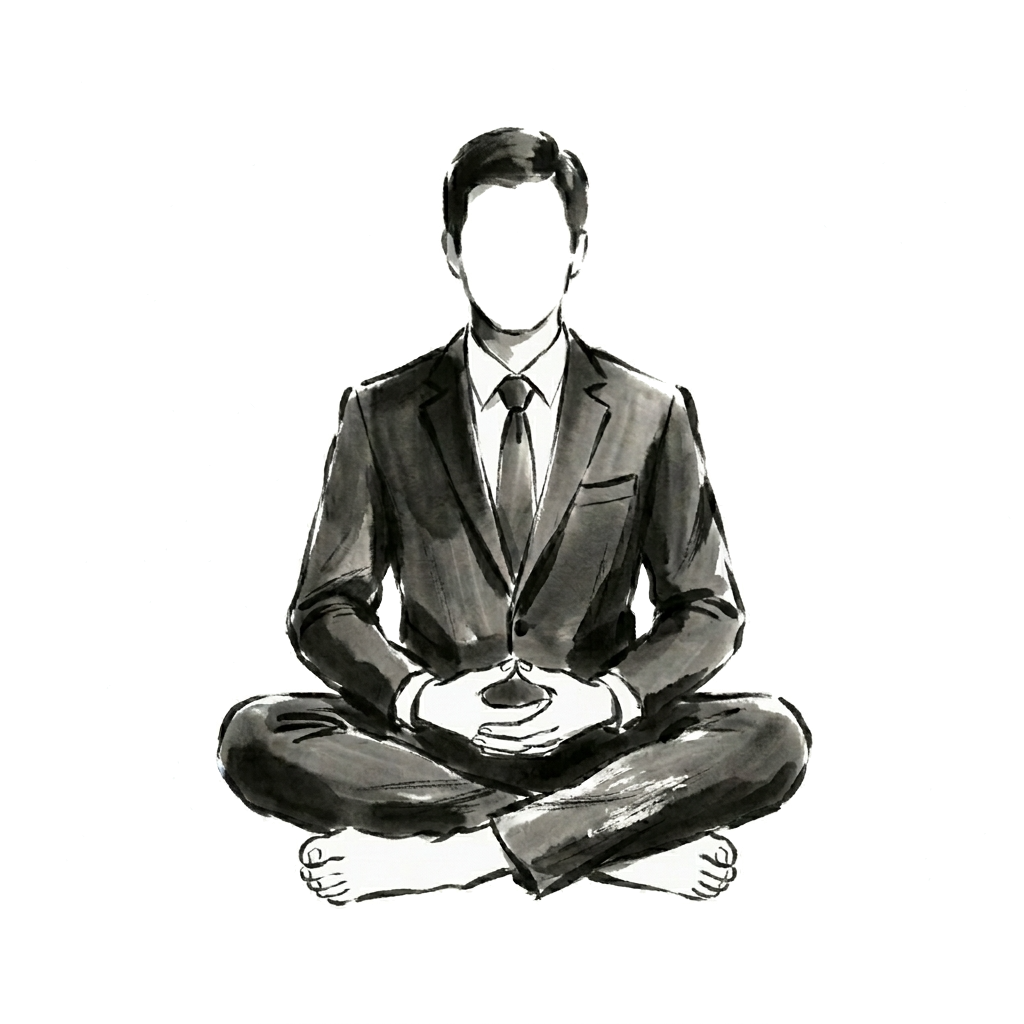
Work is hard. Not just in the "long hours and difficult deadlines" sense (though that too) but in the deeper sense that the people parts are relentlessly confusing. Colleagues who frustrate you for reasons you can't quite articulate. Meetings that go sideways despite everyone's good intentions. Emotions that show up at exactly the wrong moment. Feedback that lands like an attack even when it wasn't meant as one.
Corporate Buddhist exists because ancient contemplative traditions and modern neuroscience are converging on the same territory, and almost nobody is translating that convergence into plain language for people who work in organizations.
What Zen teachers were pointing at centuries ago regarding the constructed nature of perception, the stories we mistake for facts, the gap between who we think we are and how we actually behave, neuroscientists are now mapping with fMRI machines and controlled experiments. Lisa Feldman Barrett's research on constructed emotion, predictive processing theory, and studies on how the brain builds narrative from incomplete data all tell a version of the same story the contemplative traditions were telling all along: you are not seeing reality as clearly as you think you are, and that gap is where most of your problems live.
Corporate Buddhist is an independent publication that takes both traditions seriously. No oversimplified mindfulness tips. No neuroscience dressed up as self-help. Just a close look at why work gets complicated, and what the science and the ancient wisdom actually suggest you do about it.