Process Arguments Are Really About Deeper Disagreements
When your team keeps fighting about how to do things, you're almost never actually fighting about the process. You're fighting about what really matters, what winning looks like, or honestly, who's important. The workflow debate is just where that fight decided to show up.
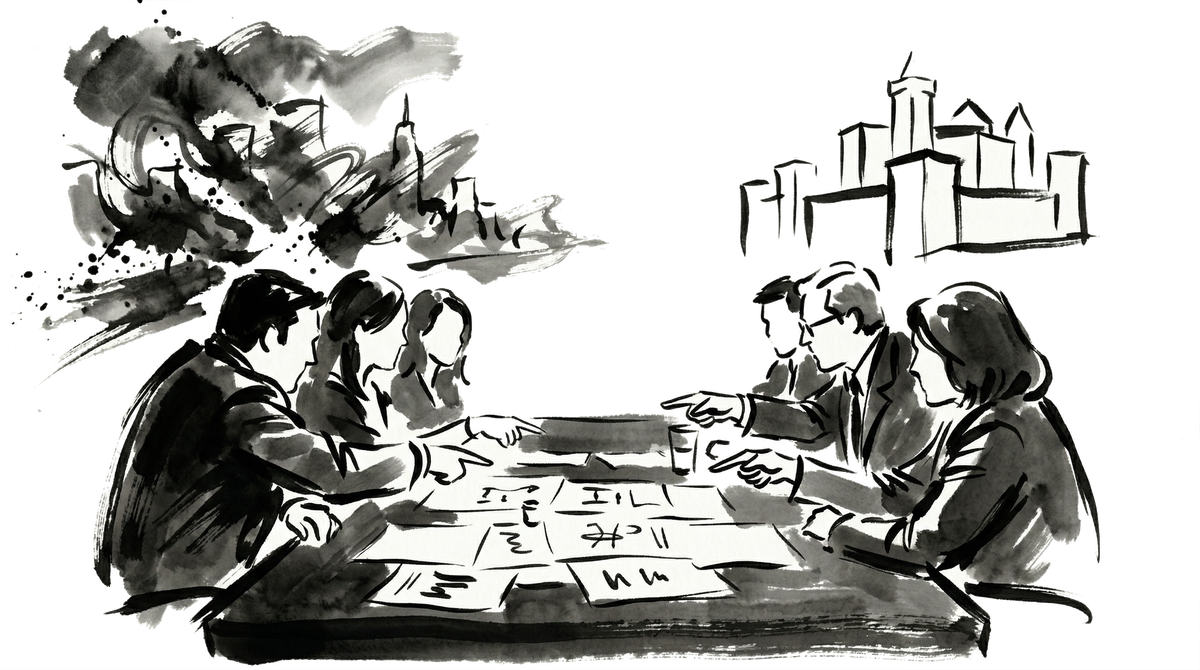
Here's the thing nobody wants to say out loud in the meeting: when your team keeps fighting about how to do things, you're almost never actually fighting about the process. You're fighting about something deeper: what really matters around here, what winning looks like, or honestly, who's important. The workflow debate is just where that fight decided to show up.
You've seen this. Two teams can't agree on the reporting structure. Or the meeting cadence. Or whose sign-off is required before a thing ships. You try a solution, it almost works, and then someone finds a new objection. You try again. Same thing. The conversation feels totally reasonable on the surface. People are using words like "efficiency" and "alignment" but nothing ever actually gets resolved. Six months later you're in the same room having a version of the same argument.
That's your signal. Real process problems get solved. Ones that keep coming back aren't really about process.
What the argument is actually defending
What's actually happening is that each side is running on a different operating assumption about what the whole thing is for. One team thinks the job is to move fast and ask forgiveness later. The other thinks the job is to protect the company from risk. Neither of them is necessarily saying that out loud. Instead, they're arguing about whether the approval form needs two signatures or three.
And those assumptions aren't just opinions people hold; they're bound up with identity. "We're the team that ships" and "we're the team that keeps the company safe" are predictions each group runs about who they are and what they're worth here. So when the other side's process wins, it doesn't just change a form, it lands as a hit to that self-model. That's why these fights run so much hotter than a scheduling detail should, and why more evidence about the form never settles them: the form isn't what's being defended. The self-prediction underneath it is.
The process debate is where the clash surfaces, but it's not where the clash lives. So fixing the form does nothing. The underlying disagreement, the one about values, or territory, or purpose, is still sitting there, totally untouched, waiting to generate the next argument.
Getting the real question on the table
What actually helps is getting the real question on the table. Not during the argument itself, that never works, but in a calmer, more structured conversation. The question is: "What would it mean about us, or about what we're doing, if the other team's approach turned out to be right?"
That question sounds a little confrontational written down, but it's not meant to be a gotcha. It's a diagnostic. It forces people to say the quiet part loud. If the other team's process won, what story would that tell? That we're not trusted? That our work doesn't matter? That we were wrong about what success even looks like? Once you hear that answer, you're finally in the right conversation.
There's a Zen saying about pointing at the moon: the finger is just the pointer, don't confuse it for the thing itself. The process argument is the finger. You need to look at what it's pointing at.
Why moving up a level unsticks it
Conflicts that seem totally stuck at one level tend to unstick when you move up a level and name what's actually in conflict. This is basically the core idea behind Fisher and Ury's book, Getting to Yes. Positions are just the visible surface; the interests underneath are where resolution actually lives. The process objection is a position. The fear about status or values driving it is the interest.
Once both sides can see that, the process question often gets a lot easier. Not always. But a lot more often than another round of the same meeting.