You're Not Who You Think You Are (And That's the Problem)
There's a version of you living in your head, with a job title, a reputation, and a set of things it's supposed to want. That version isn't you. It's a story. And most of it was written by someone else.
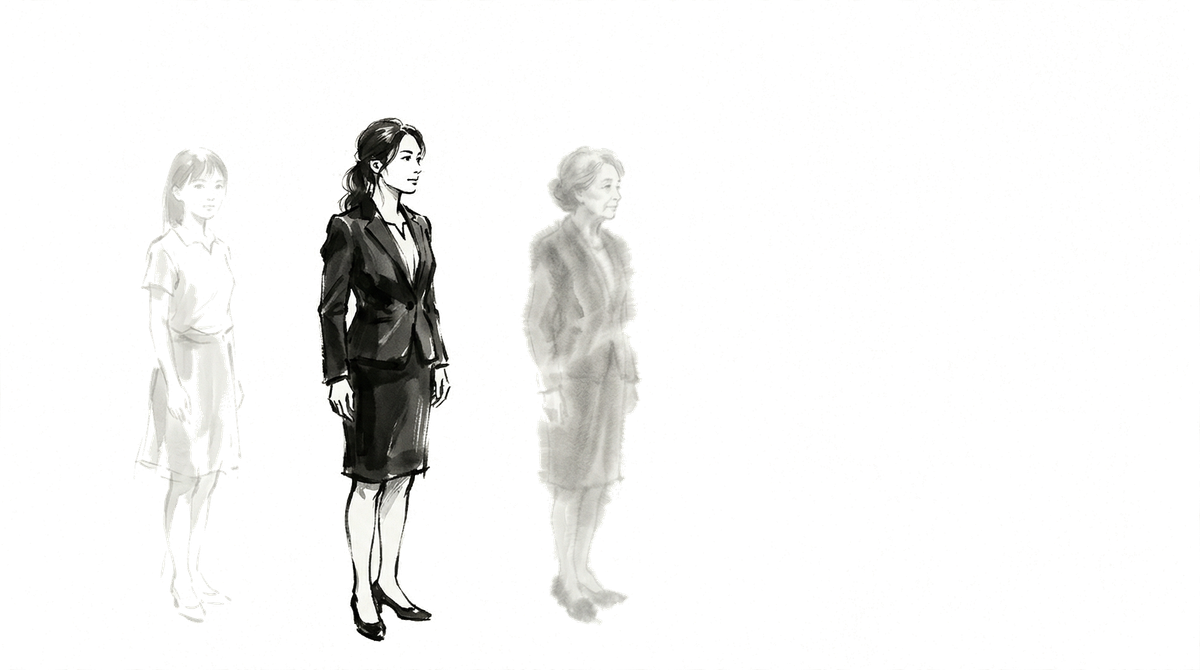
There's a version of you living in your head. It has a job title, a reputation, a set of things it's supposed to want. It knows how to behave at dinner with the in-laws, what kind of car signals the right level of success, and how to respond when a colleague takes credit for your work.
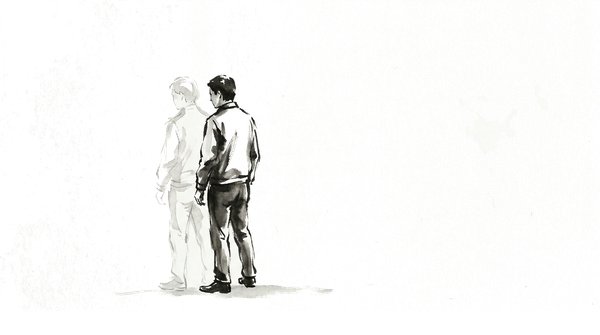
That version of you isn't you. It's a story.
Neuroscientists call this the "narrative self": the ongoing, autobiographical account your brain constructs to explain who you are and what you're doing here. Your brain doesn't experience your life as a series of raw, unfiltered moments. It edits, interprets, and stitches events into a coherent plot, with you as the main character. The problem is that most of that story was written by someone else.
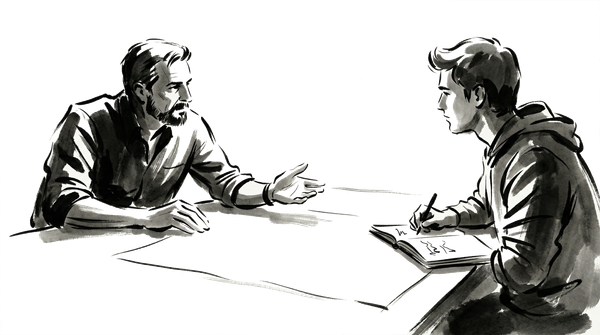
Your parents had expectations. So did your teachers, your first boss, your partner. And here's the thing: those expectations weren't really about you. They were about the other person's fears, their unresolved shame, their own inherited stories about what a good life looks like. Your father wanted you to be an engineer because uncertainty terrified him. Your manager pushes you toward leadership because she associates visibility with safety. None of this is malicious. It's just how humans work. We project our inner weather onto the people around us.
So you absorb these projections, weave them into your own narrative, and then spend years trying to live up to a character that was never quite yours to begin with.
Buddhism has a word for this: papañca, sometimes translated as "conceptual proliferation." It refers to the mind's tendency to take a single perception and spin it into an elaborate story, layered with self-referential meaning. The Pali texts describe it as the root of suffering, not because stories are inherently bad, but because we mistake them for reality.
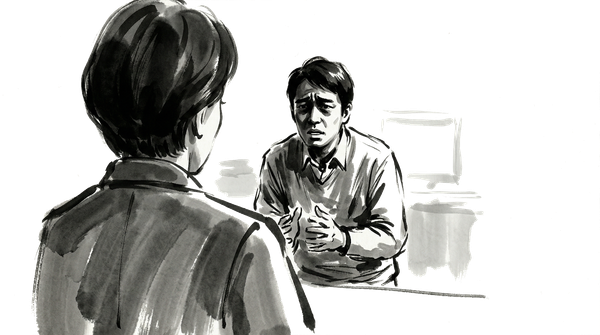
Neuroscience lands in roughly the same place. The brain's default mode network, the system most active when you're not focused on an immediate task, is essentially a narrative machine. It runs simulations, rehearses social scenarios, and generates predictions about who you are and how others see you. Much of this happens below conscious awareness. You don't decide to feel like a fraud in the meeting. The story just plays.
Even your own expectations for yourself are mostly inherited projections. The belief that you should be further along by now, that you haven't done enough, that you're somehow behind on a race no one actually organized. Those feelings have authors. They just didn't leave a byline.
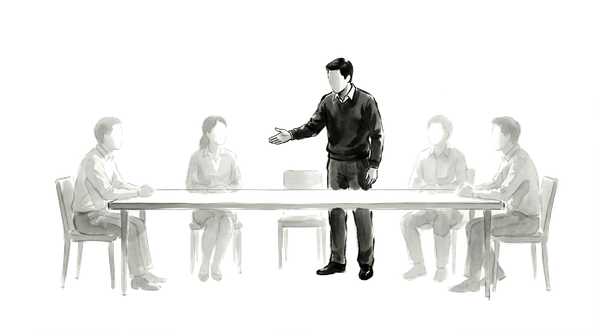
Living up to someone else's narrative, or even your own borrowed version of one, won't produce peace. It produces performance. And performance is exhausting, because the audience's standards keep shifting and the role never quite fits.
What both Buddhism and neuroscience point toward is something more basic: the capacity to notice the story while it's running. Not to silence it, but to hold it a little more lightly. To recognize that the narrator is not the author of your life, but is a very convincing storyteller.
The story will keep playing. The question is whether you're watching it or being lived by it.