When the Room Goes Quiet: Reading Silence as Data
Silence in a meeting isn't agreement, it's your team's nervous system correctly predicting that honesty is unsafe. Fixing it means redesigning the prediction loop, not asking for more courage.
Core Claim
You asked for input. The room went quiet. You moved on. And three months later, the project blew up for reasons everyone apparently knew but nobody said out loud. That silence wasn't agreement. It was a warning sign you misread as a green light.
Silence in a meeting is almost never neutral. It's a signal. And if you're treating it as consensus, you're making one of the most expensive mistakes a leader can make.
The Situation
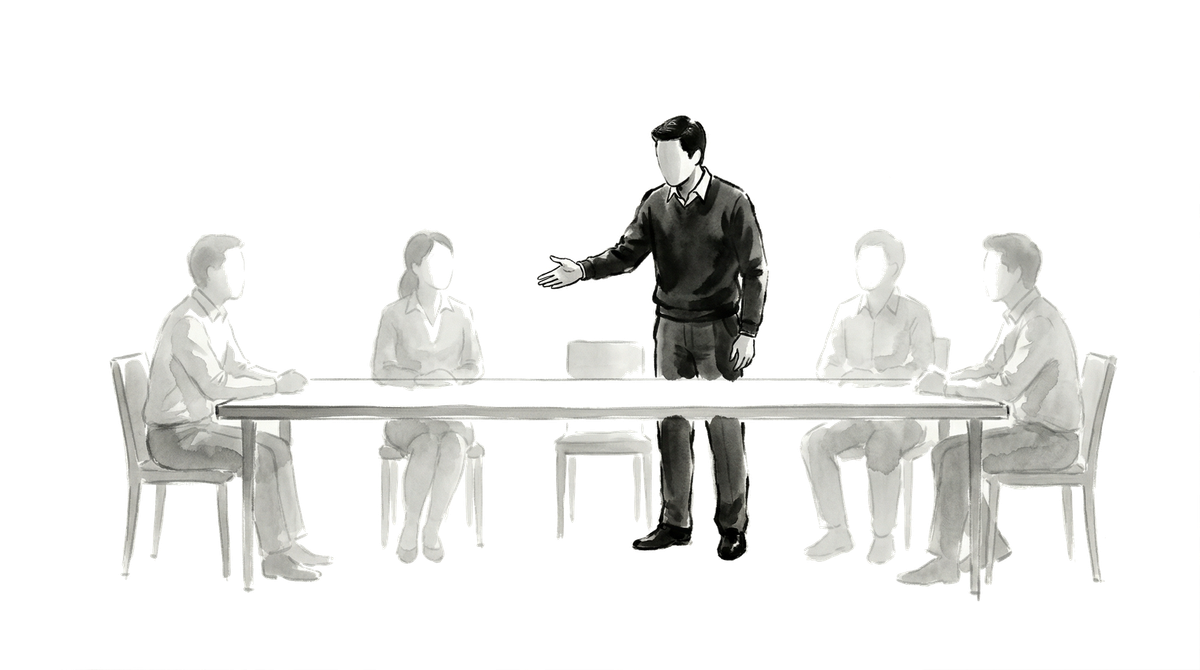
Here's how it usually goes: you're in a leadership meeting, you lay out a plan, and you ask if anyone has concerns. A few people offer thin, hedged responses. Maybe someone says "that could work" or "I think we're aligned." You take it at face value and move on.
Later, in the post-mortem, you find out that half the room had serious reservations. They just didn't say anything. And now you're left wondering: why didn't anyone speak up?
The answer isn't that your team is spineless. It's that your brain, and theirs, is doing exactly what it's designed to do.
The Mechanism
Before your brain lets you say something in a group setting, it runs a quick prediction: what happens if I speak up here? It's not a conscious calculation; it happens fast, below awareness. And it draws on everything the environment has taught it.
In organizations where candor has been subtly punished, even through eye rolls, dismissiveness, or just the feeling that certain things can't be said, the brain learns. It updates its model. And the next time someone considers raising a concern, the prediction comes back negative: this won't go well.
So the brain does the rational thing. It stays quiet.
This isn't timidity in any moral sense. It's your team's nervous system correctly modeling the social environment you've built and producing perfectly logical behavior given that model. The prediction says "speaking honestly is risky," so speech gets suppressed. The silence you're reading as agreement is actually a read-out of how safe your environment feels for honesty.
The Practice
The fix isn't to tell people to be braver. That doesn't work, because the problem isn't courage. It's prediction. You have to change what the brain predicts will happen when someone speaks up.
A few things that actually work: collect written input before the meeting, so people can share concerns before social dynamics kick in. Use anonymous polling on key questions, especially ones where you suspect people are hedging. Try structured turn-taking that requires every person to name at least one concern before any decision gets finalized.
These aren't just "more inclusive" practices in some vague HR sense. They're information extraction tools. They're how you get the data your team's brain was withholding for entirely rational, self-protective reasons.
A Zen frame worth keeping: silence isn't emptiness. It's full of everything that couldn't be said.
Why It Works
When you anonymize input or require it in writing before the room assembles, you're redesigning the prediction loop. You're making speech the safer option. The brain does its quick calculation, and this time, the answer comes back different: it's okay to say this.
You didn't ask people to be more courageous. You changed what they predicted would happen if they were honest. That's the whole game.