When Mentoring Goes Wrong
The better an expert is at their job, the harder they can be to learn from. When a senior engineer and a junior one clash, neither is being difficult. Both brains are defending a self-model the disagreement keeps poking at.
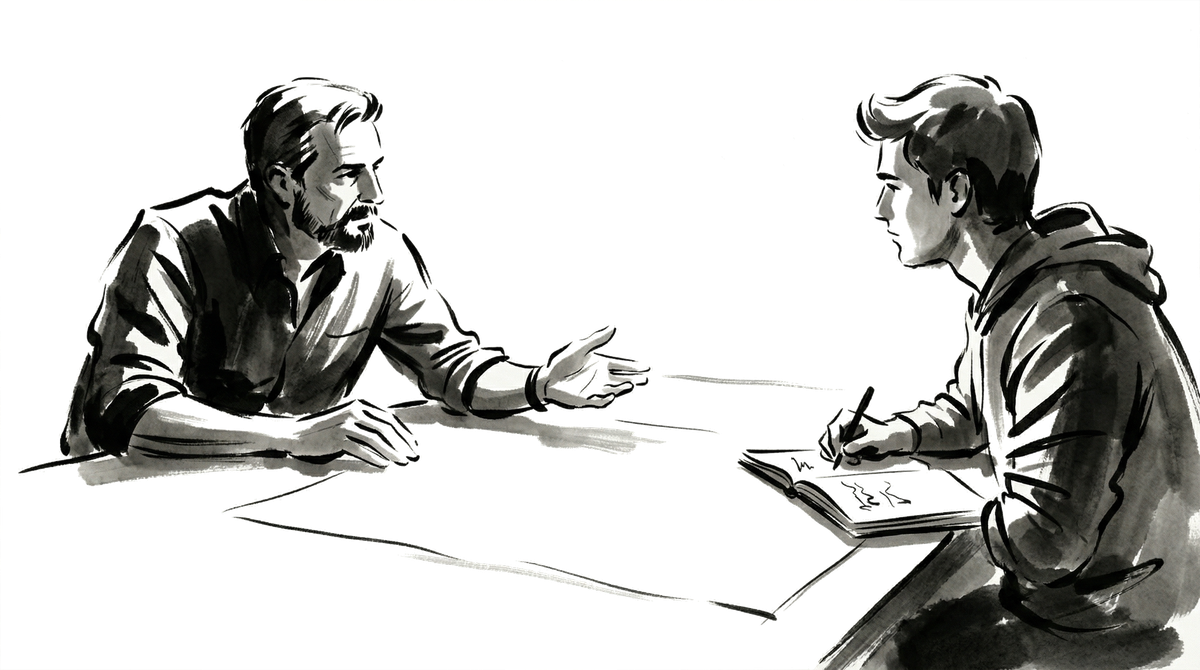
Here's something nobody tells you about expert mentors: the better they are at their job, the harder they can be to learn from.
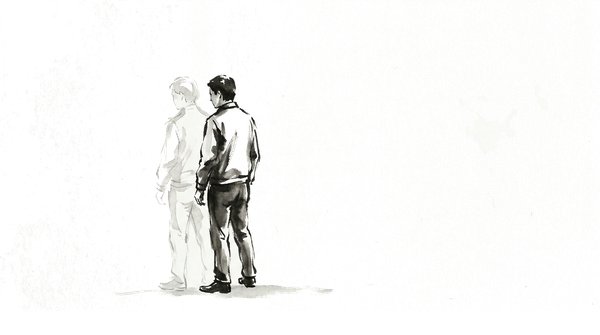
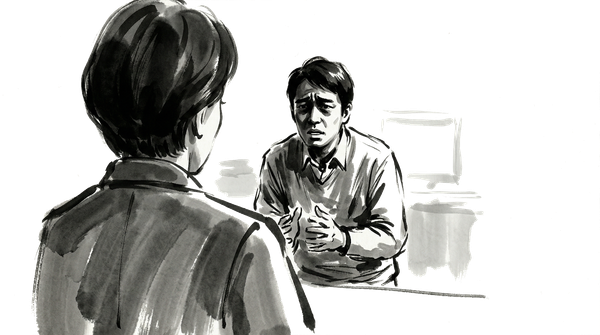
Mark has 20 years of experience. He's seen projects fail, watched teams make the same mistakes over and over, and built up strong opinions about the right way to do things. And he's probably right, a lot of the time. The frustrating part for Harry is that "probably right" and "definitely right" aren't the same thing, and the gap between those two is exactly where the tension lives.
So what's actually going on here?
Mark's brain is working against him
When you've done something for 20 years, your brain stops consciously processing it. Neuroscientists call this automatization: expertise gets encoded so deeply that you can't easily explain why you do things the way you do. Mark doesn't just know the right answer; he feels it. And when Harry pushes back, it doesn't register as a reasonable alternative view. It registers as noise.
There's also something more personal happening, and it goes to the heart of how the brain works. Your sense of who you are isn't a fixed fact sitting somewhere; it's a high-level prediction your brain actively builds and maintains, a running model of "I am the experienced one, the person who knows." Mark's identity as the expert in the room is exactly that kind of prediction. So when Harry questions his approach, even gently, it lands as prediction error against the self-model, a mismatch the brain treats as a threat, not to the project, but to the model of himself it's working to keep stable. That's why it stings out of proportion to the actual stakes of the technical disagreement. His defensiveness isn't a character flaw. It's what it feels like from the inside when a load-bearing self-prediction gets challenged.
The result? He talks more, listens less, and doubles down.
Harry's brain is working against him too
Harry is an introvert with limited experience, and that's a rough combination in this dynamic. His ideas are probably good. But without the confidence that comes from years of battle-tested decisions, he can't project certainty. And in a room with someone like Mark, uncertainty gets eaten alive.
Here's the counterintuitive part: Harry's self-doubt might actually make him a better engineer in the long run. In Zen, this quality has a name: shoshin, or beginner's mind. The idea is that an open, questioning mind sees more possibilities than one that's already decided what's true. Shunryu Suzuki captured it simply: "In the beginner's mind there are many possibilities; in the expert's mind there are few."
Questioning assumptions, staying curious, not defaulting to habit: these are features, not bugs. But they're nearly impossible to leverage when you're being talked over.
What loosens Mark's grip
The thing that helps Mark, mechanically, is anything that interrupts the automatic prediction before it fires the advice. A question like "What's your thinking here?", asked for real, does that, because it forces him to model Harry's reasoning instead of pattern-matching it to noise. Research on expert blind spots shows experienced people are often genuinely bad at explaining their own reasoning precisely because it's so automatic. Arthur Deikman called the counter-move de-automatization: the deliberate loosening of habitual patterns of thought and perception. Listening first isn't just nicer; it pulls the expertise back into a form that can actually be examined and taught.
There's a reframe available to Mark too: Harry's pushback isn't insubordination, it's signal. The teams that catch problems early are the ones where junior people predict that saying "I'm not sure about this" is safe rather than costly. Psychological safety isn't soft management; it's the condition under which those predictions come out honest.
What loosens Harry's bind
Direct confrontation clearly isn't working, and the mechanism explains why: "I think you're wrong" lands as more prediction error against Mark's self-model, so it gets defended, not considered. The framing that does better routes around the threat. "Can I walk you through my reasoning and get your feedback?" casts Harry not as challenging Mark's authority but as inviting Mark's expertise to evaluate his thinking, which fits Mark's self-model rather than fighting it. Same content, a prediction Mark's brain doesn't have to defend against.
Putting the reasoning in writing helps for a related reason: an email or a shared doc creates a record that doesn't depend on Mark choosing to listen in the moment, and the act of writing forces Harry's own thinking into a clearer shape.
Buddhist psychology names the thing underneath both sides: upadana, or clinging. Mark clings to his expertise as identity. Harry clings to the idea that being right should be enough. In predictive terms, both are holding a self-model too tightly to update it. Holding those models a little more loosely is what lets either of them actually take in the other.
And yes, Harry's manager telling him to "learn how to deal with difficult people" is a cop-out. But that's a separate problem.