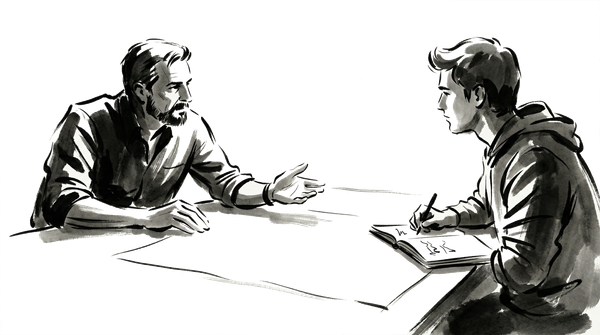
Your Manager Can't Fix Your Anxiety (And That's Not Her Job)
When a project is in crisis, the instinct is to look to your manager for reassurance. But she's stuck too, and the relief you're looking for isn't in her hands.
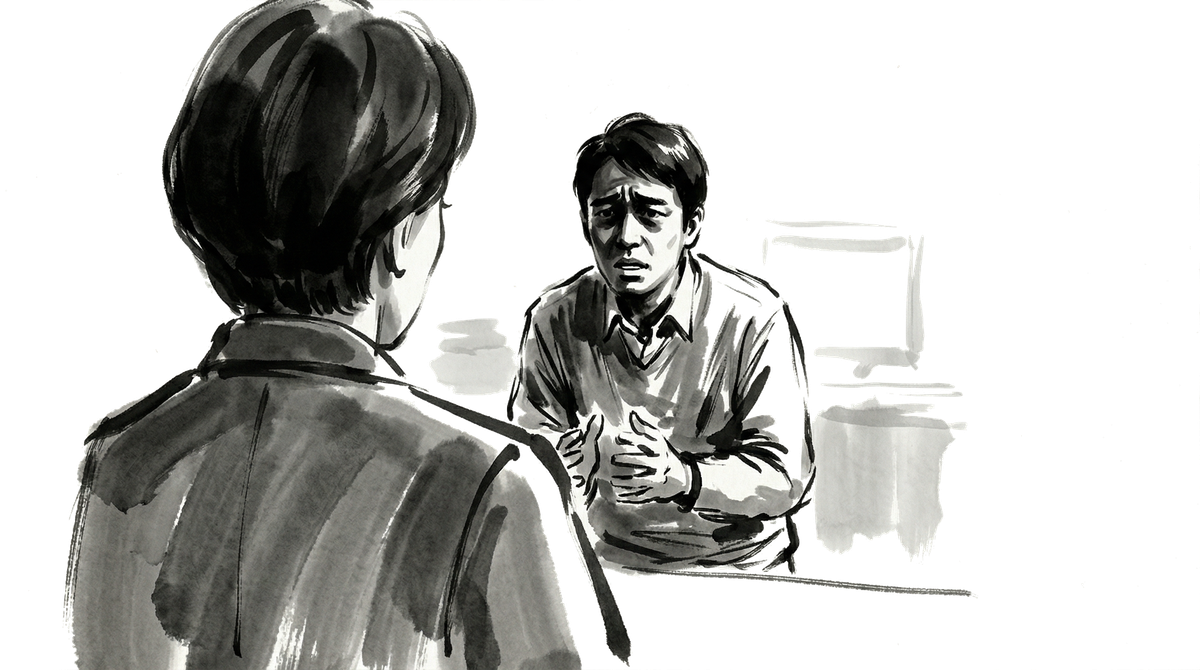
Your manager can't fix your anxiety. And the sooner you accept that, the better off you'll be.
That sounds harsh, especially when things are falling apart. The project is stalled. Resources are thin. Management seems checked out. Half your team is quietly updating their resumes, and the other half is waiting for someone to ride in on a white horse and make it all make sense. That someone, everyone seems to agree, should be the manager.
But here's the thing: your manager is stuck too.
She's probably working every angle she can think of. She's in meetings you don't see. She's having conversations with her boss that go nowhere. She's trying to get alignment from people who all have different ideas of what "fixing it" even looks like. And she's doing all of this while her own anxiety is running in the background, because her job is on the line too.
When you look to your manager to calm you down, you're asking her to solve two problems at once: the actual project problem, and your emotional response to it. The first one she might be able to help with. The second one is entirely yours to manage.
Here's what's actually happening in your brain. Your nervous system treats uncertainty the same way it treats physical danger. It scans for a source of certainty to latch onto, and in a chaotic work situation, the manager is the most visible target. Neuroscientists call this predictive processing: your brain is constantly running simulations of what's going to happen next, and when those predictions keep failing, it raises the alarm. The anxiety you feel isn't a character flaw. It's your brain doing exactly what it evolved to do, just in a context it wasn't designed for.
Buddhism has a word for what's happening at a deeper level: upādāna, often translated as clinging or attachment. You're clinging to a particular outcome (the project succeeds, the job is safe, the manager makes it okay) and the suffering comes not from the situation itself, but from the grip. When we're attached to how things should go, we stop seeing what's actually in front of us.
So what do you actually do with that?
Start by separating what you can control from what you can't. You can't make leadership prioritize this project. You can't manufacture alignment where none exists. You can't know for certain whether the project will survive. Those things are real, and genuinely uncertain. Sitting with that uncertainty is uncomfortable, but it's honest.
What you can control: how you show up, what work you do today, how you treat your colleagues, and what you're building for yourself regardless of how this project ends.
There's also a practical move most people skip: talk to your manager about the work, not your fear. Ask what the most critical deliverable is right now. Ask what success looks like in the next two weeks, not the next two years. Shorter horizons are easier to navigate when everything feels uncertain. Neuroscientist Lisa Feldman Barrett calls this "body budgeting," the idea that you can reduce the cognitive load of uncertainty by shrinking the prediction window. Your brain handles near-term uncertainty much better than open-ended dread.
One more thing, and this is the counter-intuitive part: naming what you're feeling actually helps regulate it. Research by Matthew Lieberman at UCLA found that labeling an emotion, simply saying to yourself "I'm anxious" or "I'm afraid," reduces activity in the amygdala and brings the prefrontal cortex back online. You don't need the project to be saved to feel okay. You just need to stop outsourcing your nervous system to your manager.
She's doing her best in a broken system. Cut her some slack, and cut yourself some too. The situation is hard. You don't have to pretend it isn't. But the relief you're looking for isn't in her hands.