The Colleague Who Takes Credit: What's Actually Happening
Someone just presented your work as theirs, and how you handle the next five minutes matters a lot more than the injustice itself. Credit-taking is a threat response, not a character flaw, and understanding that mechanism gives you a real strategic edge.
Core Claim
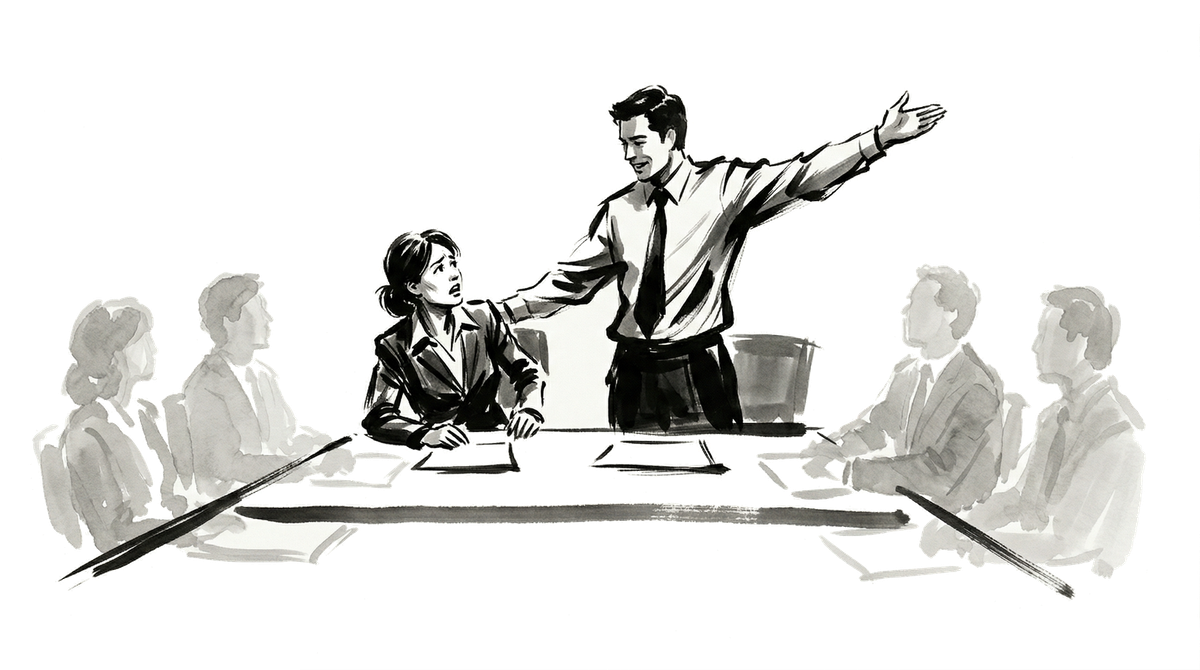
Someone just presented your work as theirs. Maybe they did it in front of your manager. You're sitting there with a hot mix of anger, embarrassment, and the urge to blurt out a correction right now. Here's the thing: how you handle the next five minutes matters a lot more than the injustice itself. And if you understand what's actually happening in that person's head, you get a real edge in how you respond.
Credit-taking is a threat response. Not an excuse, but a mechanism. Understanding the difference changes everything.
The Situation
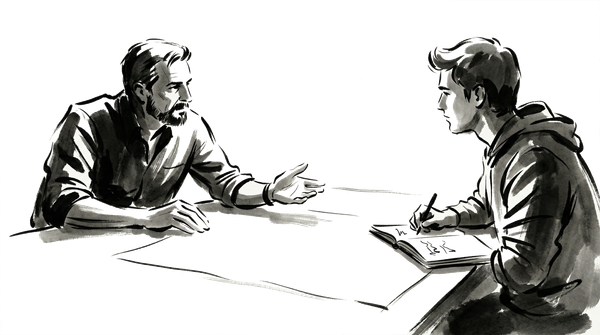
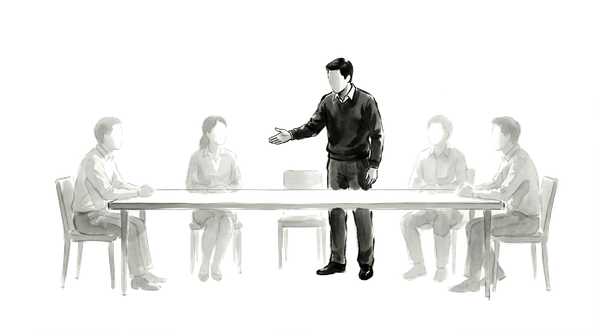
The scene is familiar. A colleague presents work that was yours, or at least mostly yours. They do it smoothly, maybe without even thinking. Or maybe they thought about it plenty. Either way, you're left recalibrating whether to say something, how to say it, and whether it will make you look worse than them.
The instinct is to correct the record, publicly, right now. That instinct is almost always wrong.
The Mechanism
Two nervous systems are in threat mode at the same time. Your colleague is protecting a self-image that depends on being seen as capable and central. Their brain flagged a risk, probably fear of being overlooked or undervalued, and produced behavior designed to neutralize it. It's not a carefully considered act of malice; it's a fast, self-protective move.
Your brain is doing the same thing, just in the other direction. Your organizational standing, your professional narrative, your sense of being seen for what you contribute: all of that just took a hit. You're in threat mode too.
This doesn't make the behavior equivalent. One person acted badly. But two threat responses colliding in a meeting room is exactly how things escalate in ways that hurt you more than them.
The Practice
Split your response into two parts: the immediate and the strategic.
In the moment, the worst move is a direct public correction that sounds like an attack. It triggers their threat response, makes the room uncomfortable, and often reads as pettier than the original offense. The better move is brief, calm, and additive. Something like, "Yes, and building on what I brought to that piece..." You're not conceding anything; you're expanding the narrative rather than attacking theirs. It lands better because it's lower-threat.
The strategic response happens separately, in private. That's where you name what you observed in behavioral terms, not character terms. Not "you took credit for my work," but "I noticed the presentation didn't reflect the division of the work we discussed." That framing opens a conversation. The other framing starts a conflict.
Why It Works
You're avoiding a threat-response collision. When you go directly at someone's self-model in public, you almost guarantee an escalation that pulls the focus away from the actual issue. The additive statement in the moment is a lower-threat intervention; it creates room for correction without forcing a defensive reaction.
And the private, behavioral conversation handles the pattern, which is the real problem. One incident might be an accident. A pattern is something else entirely. Addressing it calmly and specifically is what actually changes the behavior.