The Burnout Nobody Saw Coming
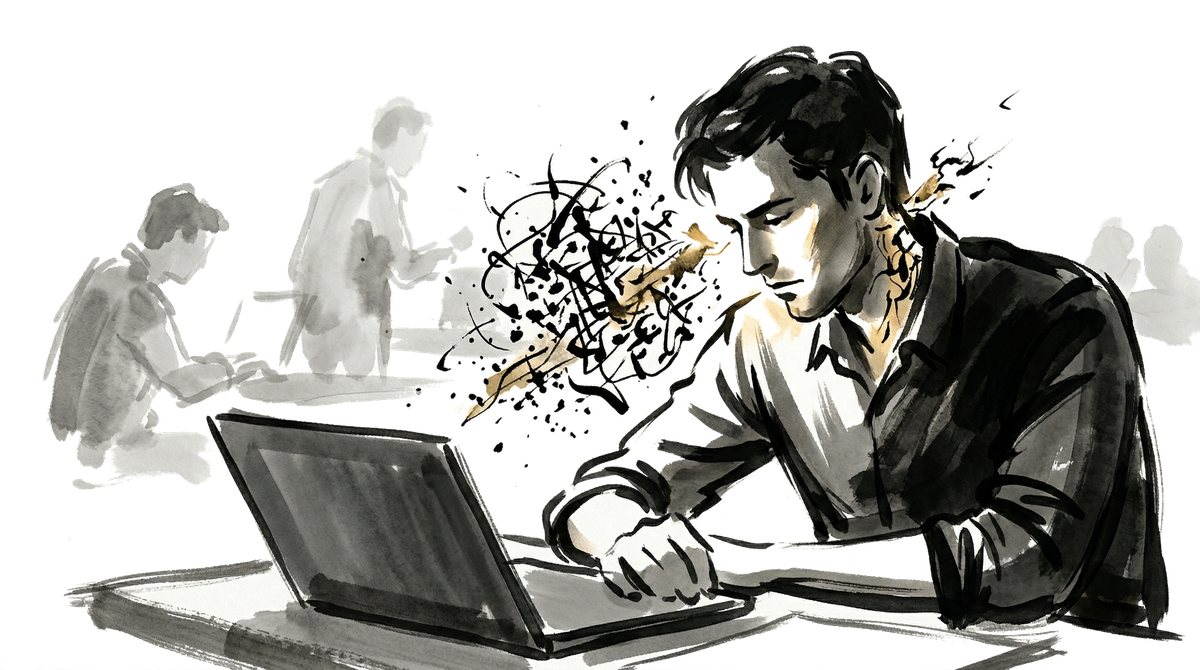
Burnout doesn't announce itself, it accumulates below the level of conscious awareness until the brain decides the most efficient solution is to stop predicting anything at all. It's not a workload problem; it's a prediction problem.
Core Claim
You were fine. Then you weren't. And nobody saw it coming, including you.
That's the thing about burnout that doesn't get talked about enough: it doesn't announce itself. It doesn't show up as a dramatic breakdown or a sudden resignation letter. It shows up as a quiet, creeping numbness, and by the time anyone notices, the damage is already done. Here's the uncomfortable truth: burnout isn't really about workload. It's about your brain running a losing bet, over and over again, until it finally decides to stop betting altogether.
The Situation
Think about the person on your team who never complained. Who delivered, adapted, pushed through. The one you'd have put money on as "fine." Then one day they hand in something mediocre, or they go quiet in meetings, or they just leave. And you're blindsided.
So are they, often. That's the counterintuitive part. Burnout accumulates below the level of conscious awareness. You don't feel yourself burning out; you feel tired, then more tired, then nothing much at all. By the time the numbness settles in, the system has already been failing for a while.
The Mechanism
Here's what's actually happening under the hood.
Your brain is a prediction machine. Everything it does, every bit of effort it sanctions, is based on a model: if I do this, that will happen. Work hard, get recognized. Push through, see progress. Show up, feel like it matters. These are predictions, and your brain is constantly checking whether reality matches them.
When reality doesn't match, you get what neuroscientists call prediction error. The brain registers the mismatch and updates its model. That's normal and healthy. But when the mismatch is chronic, when you keep working hard and the recognition never materializes, when effort keeps failing to produce the expected progress or meaning, something shifts.
Sustained model revision is expensive. The brain is working overtime, constantly recalibrating a model that keeps being wrong. At some point, the most efficient solution is to stop predicting anything at all. Flatten the model. Expect nothing. Then nothing can disappoint you.
That's what emotional numbing in burnout looks like at a mechanistic level. It's not weakness. It's not a character flaw. It is the predictive brain doing the most rational thing it knows how to do when it's stuck in a losing game: it stops playing.
The Practice
The early warning sign isn't fatigue. Fatigue is a lagging indicator. The early warning sign is the quality of your anticipation.
Before burnout collapses everything, there's a window. You can still feel the mismatch. Effort feels disproportionate to the return. The work feels pointless in a way you can almost put your finger on, but haven't quite articulated. That window is where you can actually do something.
The practice here is affect labeling, and it's more precise than it sounds. Instead of logging "I'm tired," try naming what's actually going on: "I feel ground down and invisible." "I feel like I'm working hard into a void." "I feel like none of this is going anywhere." The specificity matters because vague fatigue can't be acted on; specific mismatch can. "Invisible" tells you something about the feedback loop. "Going nowhere" tells you something about whether progress feels real.
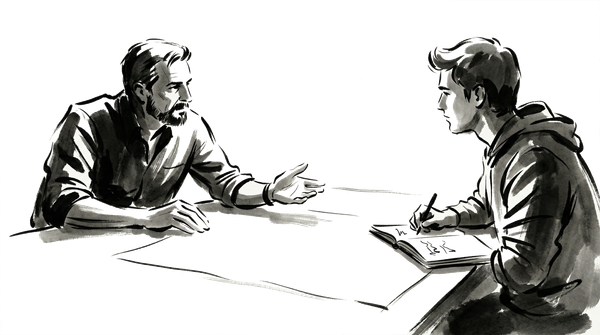
For managers, the structural version of this is building feedback loops that actually close. Not "great job out there," but: "The framing you used in that presentation changed how the client thinks about the whole project. That was you." Specific. Causal. Traceable to something the person actually did.
Why It Works
Generic praise doesn't update the brain's model precisely enough to matter. "You're doing great" is noise. It doesn't tell the predictive system what is working or why effort is paying off, so the brain can't incorporate it into its predictions.
Specific feedback is neurologically different. It closes the loop. It tells the brain: the model is working, the effort is landing, the prediction was right. That's what sustains motivated effort over time. Not inspiration, not pep talks, not promises of future reward. A closed loop, right now, about something real.
Burnout is what happens when those loops stay open too long. The fix isn't less work. It's restoring the signal.