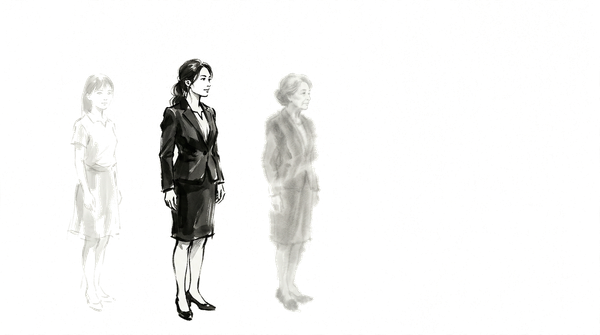
The Promotion You Didn't Get and the Story You Told Yourself About It
You didn't get the promotion, and your brain is already writing the story about why. That story feels like processing, but it's mostly protecting. And it might be keeping you exactly where you are.
Core Claim
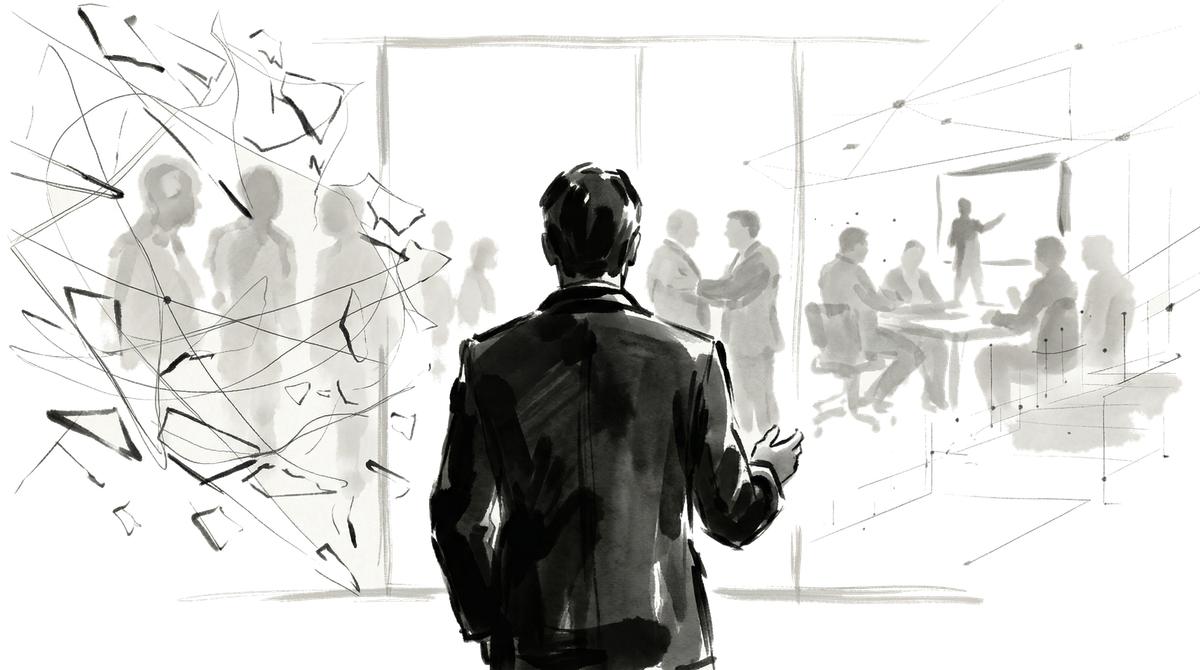
You didn't get the promotion. That stings. And right now, your brain is doing something that feels like processing but is actually more like protecting. The story you're telling yourself about what happened is either going to help you grow or keep you exactly where you are. Here's the uncomfortable part: most of us tell the wrong story.
The Situation
Someone else got the role. Maybe it was a colleague you respect, maybe one you don't. Either way, you have a theory. The process was political. Your manager never really saw your contributions. The deck was stacked. These explanations feel true because they fit the facts you can see. But they're doing a lot more work than you realize, and most of that work is invisible to you.
The Mechanism
After a setback, your brain's default mode network kicks on and starts generating explanations. It's essentially running a post-mortem. The problem is, that post-mortem has a built-in bias baked in.
Decades of attribution research show a consistent pattern: people tend to credit their successes to internal factors (skill, effort, talent) and blame their failures on external ones (unfair process, bad luck, other people's biases). Psychologists call this self-serving attribution bias, and it exists for a good reason: it protects your self-image from threat.
The cost, though, is steep. The story that protects your self-model is precisely the story that keeps you from updating it. And if your model doesn't update, neither does your behavior. You'll walk into the next opportunity carrying the same gaps, telling yourself the same story again.
The Practice
The fix isn't to swing to the other extreme and conclude you're inadequate. That's just threat in the opposite direction, and it's equally useless. The goal is precision: find the specific, behavioral gap, if one exists, that is actually within your control.
To do that, you need feedback. But how you ask for it matters enormously. Don't ask "why didn't I get it?" That question puts the other person in the position of delivering a verdict, and most people will dodge it. Instead, ask this: "What would the person who got it need to demonstrate that I didn't?"
That single reframe changes everything. You're not asking for a judgment about your past; you're asking for a prediction about future behavior. It's forward-looking, specific, and far less threatening to answer.
Why It Works
When you ask someone to describe what a successful candidate demonstrated, you're prompting them to think in behavioral terms, not character terms. You get something concrete: a communication pattern, a level of visibility, a specific skill, a way of presenting in meetings. That's actionable. Your brain can work with that.
More importantly, you're giving your own brain something to incorporate rather than a verdict to defend against. The narrative shifts from "the system failed me" to "here's the specific thing I can do differently." That's not just better for your career; it's a fundamentally more accurate model of how growth actually works.
The story you tell yourself after a setback isn't just a coping mechanism. It's a prediction about your future. Make sure it's the right one.