When Someone Criticizes You, Your Brain Goes to War
Criticism doesn't just sting, it activates the same neural circuits as physical pain. Understanding that isn't just interesting; it's what lets you actually use feedback instead of just surviving it.

Someone gives you critical feedback. Your face stays neutral. You say "thanks, that's helpful." But inside, something has already seized up. You feel defensive, or embarrassed, or quietly furious. Maybe all three.
Here's what's actually happening: your brain just treated that feedback the same way it would treat a physical threat. And understanding that isn't just interesting, it's the thing that lets you actually use criticism instead of just surviving it.
Core Claim
Criticism stings not because you're thin-skinned, but because your brain is wired to treat social threat the same as physical danger. The same circuits fire. The same hormones release. The goal isn't to stop feeling it. The goal is to understand what your brain is doing so you can choose what happens next.
The Situation
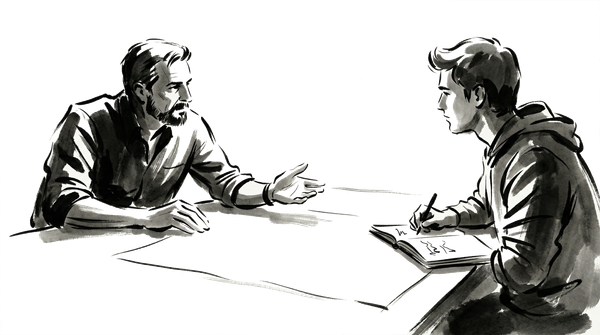
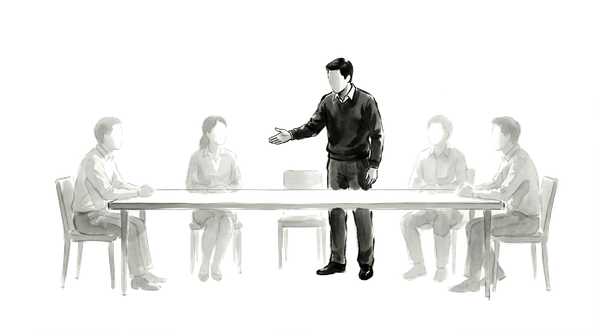
Your manager tells you the report missed the mark. A peer says your presentation was hard to follow. A direct report gives you anonymous feedback that says you're not approachable. Whatever the specifics, the feeling is familiar: a tightening, a flush of heat, a sudden urge to explain yourself or go quiet.
Most people experience this as a character flaw. They think: "I should be able to take feedback better than this." But that framing is wrong, and it gets in the way of actually doing anything useful.
The Mechanism
Here's what's happening in your brain. When someone criticizes you, your anterior insula and anterior cingulate cortex, the same regions that process physical pain, activate. Naomi Eisenberger's research at UCLA showed that social rejection and physical pain share neural circuitry. Being criticized doesn't just feel like being hurt. Neurologically, it is being hurt.
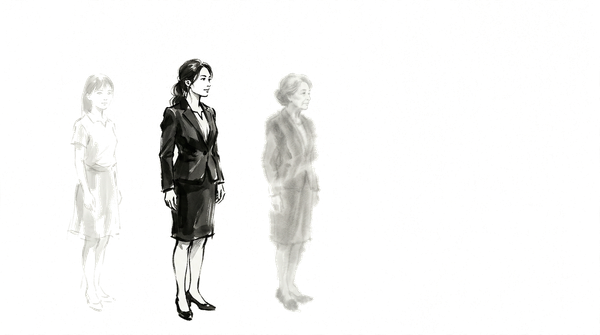
On top of that, your brain's predictive processing system had a model of yourself in that conversation: competent, seen, valued. The criticism violates that prediction. Your brain registers this as a prediction error, and prediction errors demand resolution. Quickly. That urgency is what you're feeling when you rush to explain yourself before the other person has finished speaking.
Your brain has a constructed self-concept (it's not a fixed thing, it's a working model that gets defended). And when that self-concept is challenged, it runs the same self-protective narrative machinery around setbacks: the instinct is to explain the criticism away, attribute it to the other person's bias, or decide they just don't understand.
This is efficient. It protects the model. It also prevents the model from updating on anything real.
The Practice
The single most useful thing you can do in the moment is not respond. Not because you're suppressing yourself, but because your brain literally needs a few seconds to shift from threat-response mode to something more useful. Research on affect labeling (Lieberman et al., 2007) shows that naming what you're feeling, even internally, reduces amygdala activation and restores prefrontal access. So before you say anything, just quietly name it: "I feel defensive right now." That's it. That small act buys you back your thinking.
Then, when you do respond, separate the signal from the noise. Criticism almost always contains both. The noise is the delivery: the tone, the timing, the way it landed. The signal is the underlying behavioral observation, if there is one. Your job is to find the signal, even if the delivery was clumsy.
Why It Works
The ancient Buddhist concept of vedanā describes the immediate feeling-tone that arises before conscious thought: pleasant, unpleasant, or neutral. Every experience is tagged this way in the first instant. You can't stop that. What you can interrupt is the habitual chain that follows. In Pali texts this chain is called paticca-samuppāda, dependent origination: sensation leads to craving or aversion, which leads to grasping or pushing away, which generates suffering. Criticism hits the vedanā register as unpleasant. The aversion fires. The defensive narrative starts constructing itself.
Naming the feeling, as Matthew Lieberman's research shows, inserts a break in that chain. You're not transcending your biology. You're just introducing a pause wide enough to choose something other than the automatic response.
The feedback that stings the most is often the most useful. The ones that roll right off you are the ones that don't touch anything real.