Why Being Right Feels Like Survival
Your brain treats challenges to deeply held beliefs the same way it treats physical threats, and that's why rational argument almost never resolves deep conflict.
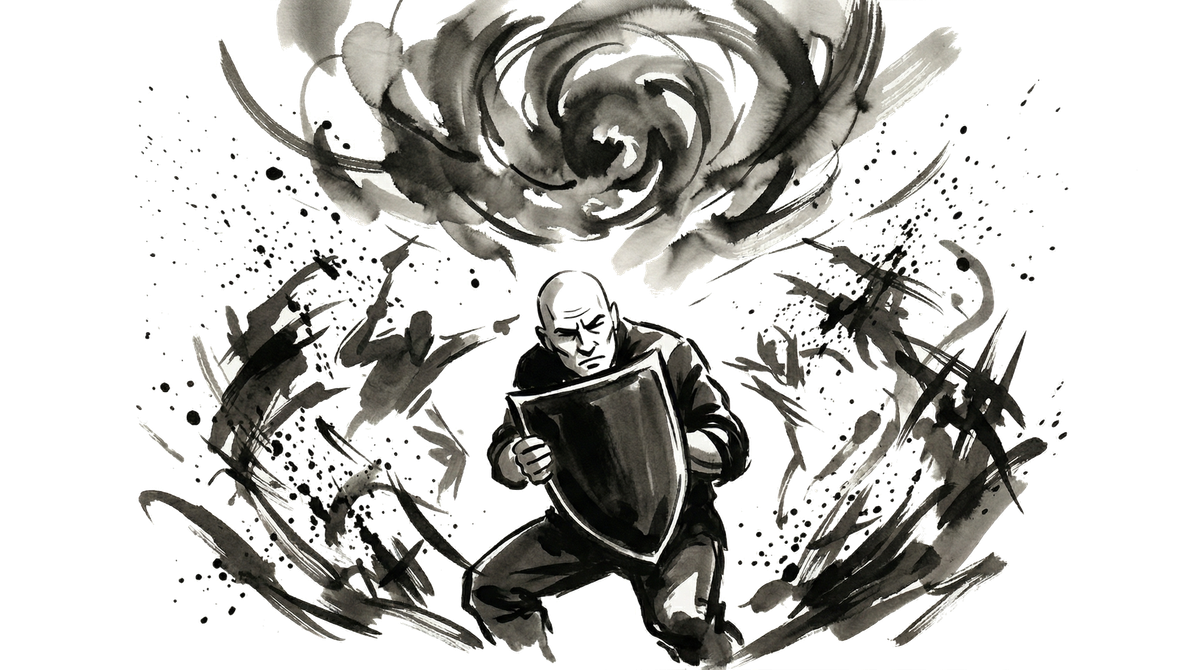
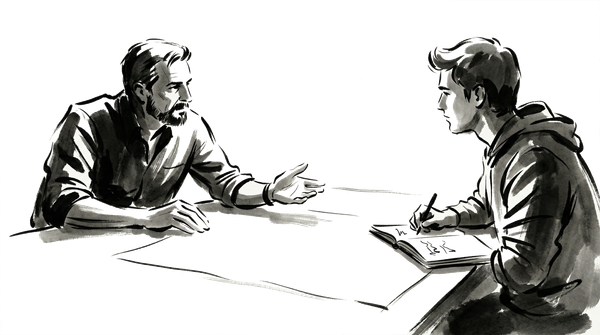
Ever notice how a political argument with your uncle at Thanksgiving feels less like a debate and more like a fight for your life? There's a real reason for that. And it's not because your uncle is uniquely insufferable (though, maybe).
Your brain is basically a prediction machine. Like, all day long, it's running a simulation of the world and constantly asking: "Does what's happening right now match what I expected?" When reality lines up with the prediction, great, nothing to see here. But when something doesn't fit, your brain throws up a red flag. That mismatch costs energy. It creates discomfort. And your brain will do a lot to make it go away.
Here's the thing though: your beliefs aren't just random opinions floating around in your head. They're more like the operating system the whole simulation runs on. Your belief that you're a good person, that your community is trustworthy, that the world basically makes sense, these are the high-level rules everything else gets filtered through. Neuroscientists call them "priors." They're baked in deep.
So when someone challenges one of those big beliefs, not just "you got this fact wrong" but "your whole way of seeing this is broken", your brain doesn't process that as an intellectual problem to solve. It processes it as a threat. Same systems, roughly. Same stress response.
Now layer in something called terror management theory, which comes from the work of Jeff Greenberg and his colleagues back in the 1980s. The basic idea is kind of wild: a lot of human behavior is secretly motivated by our awareness that we're going to die. We know we're mortal, and that knowledge is terrifying, so we build these elaborate cultural systems, religions, ideologies, and identities to make us feel like we're part of something bigger and more permanent than our own fragile bodies. Being a good American, a devoted parent, a committed activist: these roles give us symbolic immortality. They make the whole thing feel like it means something.
What happens when you attack someone's worldview, then? You're not just disagreeing with them. You're, in a weirdly literal sense, threatening their defense against existential dread. Studies in terror management have shown that when people are reminded of their own mortality, they double down harder on their cultural beliefs and react more aggressively to outsiders who challenge them. The stakes feel enormous because, at some level, they are.
Put these two things together: the brain's constant drive to protect its predictive model, and the existential weight we pile onto our belief systems, and you start to understand why rational argument almost never changes anyone's mind in a heated moment. You're not fighting bad logic. You're fighting a survival response. Throwing facts at someone in that state is like trying to calm a smoke alarm by explaining that there's no actual fire. The alarm doesn't care about your explanation.
This is genuinely humbling if you sit with it. It means that the times you've felt absolutely certain you were right, and that the other person was just being stubborn or stupid? Your brain was doing the exact same thing theirs was. Running threat detection. Protecting the model.
The research suggests the only things that actually shift deep beliefs are safety, time, and relationships. Not debate points. Which is inconvenient, but probably worth knowing.