Why Your Difficult Colleague Isn't Who You Think They Are
The difficult colleague living rent-free in your head is largely a character your brain invented, built from old interactions, confirmed by selective memory, and almost never updated. It's a model, and models can be wrong.
Core Claim
That colleague who makes you groan every time you see their name in your inbox? The one you've already mentally prepared a response for before they've said a word? Here's the thing: the version of them living rent-free in your head is largely a character your brain invented. Built from old interactions, confirmed by selective memory, and updated almost never. It's not an accurate picture of who they are. It's a model. And models can be wrong.
The Situation
You know exactly how this goes. They do something that irritates you. Then they do it again. Now every interaction feels like more proof that you had them figured out from the start. They're difficult. They're dismissive. They always do this. The evidence keeps piling up, and your read on them feels more certain every week.
But here's what's actually happening underneath all that certainty.
The Mechanism
Your brain isn't a neutral observer. It's a prediction machine, constantly generating expectations based on past experience and then filtering incoming information through those expectations. Once you've built a strong mental model of someone, your brain starts doing something called precision weighting: it amplifies evidence that confirms the model and quietly discounts evidence that doesn't fit.
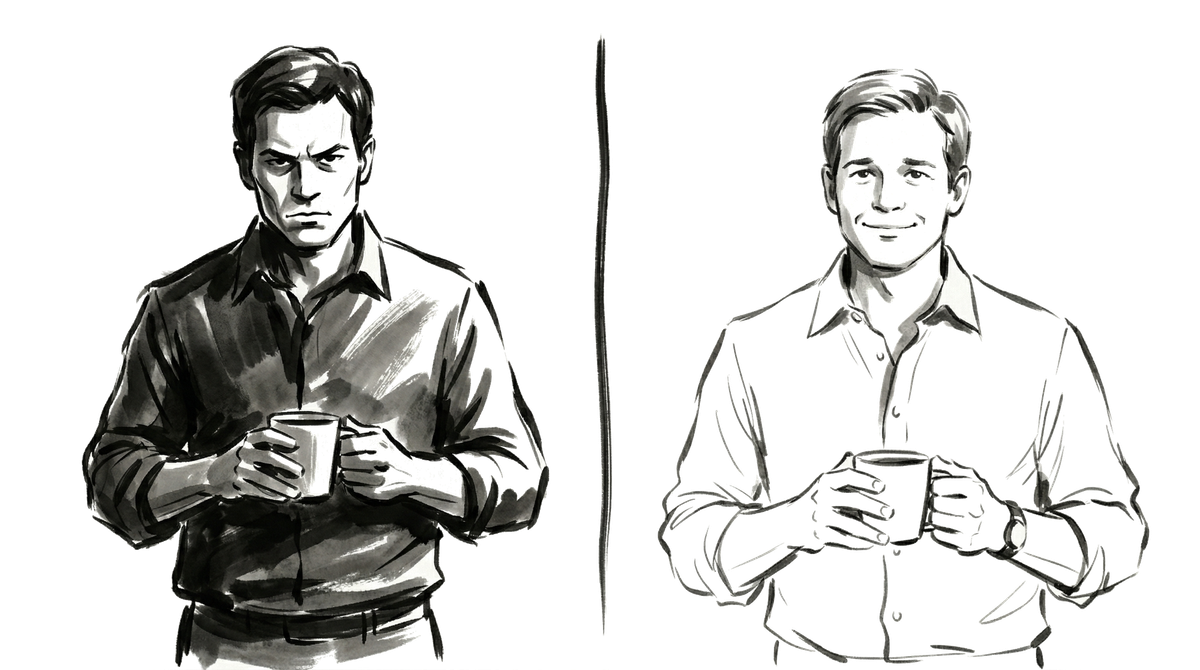
This isn't something you're choosing to do. It's not a character flaw. It's just how perception works. Neuroscientist Lisa Feldman Barrett's research makes this uncomfortably clear: you are literally perceiving your difficult colleague differently than someone with no history with them would. A neutral observer might see someone who interrupts occasionally. You see someone who is fundamentally dismissive. Same behavior. Very different experience.
The result is a self-reinforcing loop. Your model shapes what you notice. What you notice confirms your model. Repeat indefinitely.
The Practice
The fix is surprisingly simple, though it takes a little intention.
Before your next interaction with this person, stop and put your prediction into words. Specific, behavioral words, not character judgments. Not "he's going to be dismissive." Instead: "I expect him to interrupt me before I finish making my point." Not "she never listens." Instead: "I think she'll check her phone twice in the first ten minutes."
That specificity matters. You're forcing a vague, automatic feeling into an explicit, testable prediction.
Then add one more question: What would you notice about this person if you had zero history with them? If you walked in completely fresh, what would you actually observe?
You don't have to pretend the history doesn't exist. You just need a small crack of genuine curiosity about what's actually in front of you right now.
Why It Works
When you name something explicitly, your prefrontal cortex gets recruited. The automatic threat response that usually fires before you've consciously registered anything gets a little friction inserted into it. You've taken an implicit belief, something your brain was treating as established fact, and converted it into a hypothesis. And hypotheses, unlike gut feelings, can turn out to be wrong.
This is grounded in Barrett's affect labeling research, supported by Lieberman et al.'s 2007 work in Psychological Science__showing that putting feelings into words reduces their automatic grip on behavior. The same mechanism applies here. You're not suppressing your reaction. You're just giving your brain a chance to actually look before it decides it already knows what it sees.
Your colleague might still frustrate you. But the person who shows up when you actually look might surprise you.