You Won't Have to Dodge
Most people try to dodge the emotional bullets at work, the dismissive email, the careless comment, the feedback that lands like an attack. But Morpheus wasn't describing a better dodging technique. He was describing a different relationship with the bullets entirely.
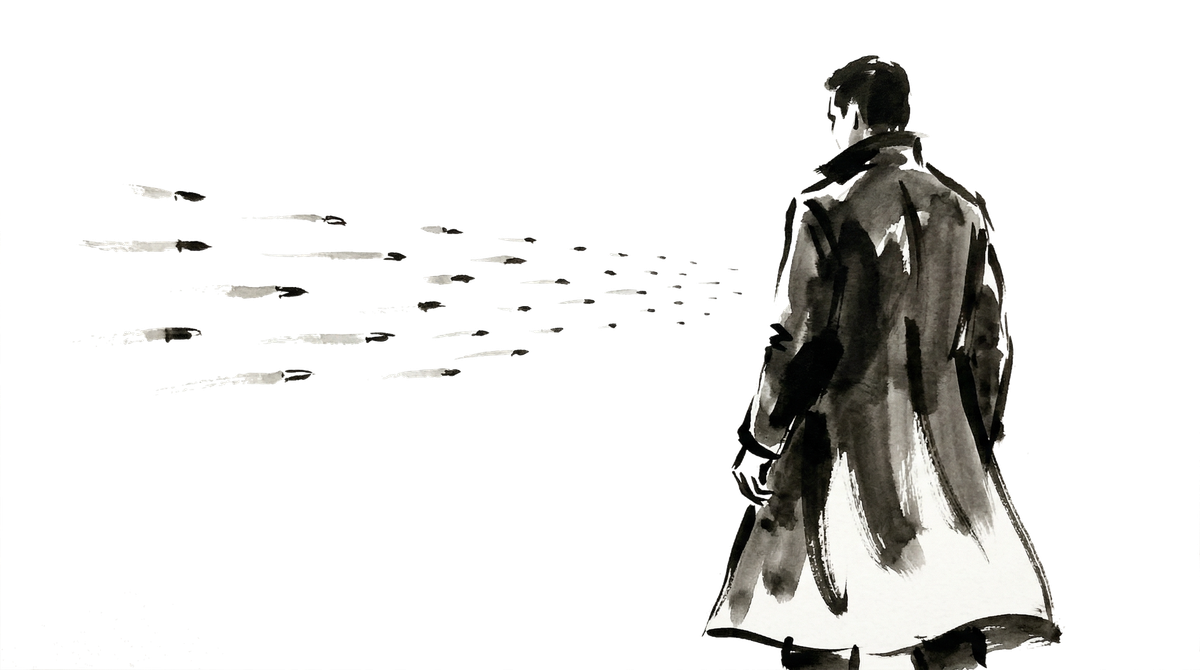
In the 1999 sci-fi movie, The Matrix, Neo, freshly discovering he might be something special, asks the obvious question:
"What are you trying to tell me? That I can dodge bullets?"
Morpheus replies:
"No, Neo. I'm trying to tell you that when you're ready, you won't have to."
That's not a line about speed or reflexes. It's about reality construction. The bullets only matter because Neo believes they do.
Now think about the last time someone said something at work that landed hard. A careless comment in a meeting. A dismissive email. A piece of feedback that felt like a personal attack. Maybe your boss said something in front of the whole team that made your face go hot.
Those words are the bullets.
And here's the thing most people miss: they only do damage because some part of you believes they're real. Not real in the sense that words were spoken, but real in the sense that they carry the meaning and threat you've assigned to them. Your brain, running its usual threat-detection software, grabbed those words, pattern-matched them to old fears, and fired up the whole emotional response before your rational mind had a chance to weigh in.
Lisa Feldman Barrett's work on constructed emotion makes this point clearly: emotions aren't things that happen to you. Your brain predicts and builds them, using past experience as raw material. The tightness in your chest, the flush of shame, the spike of anger; these are your mind's best guess at what this situation means, not a direct readout of objective reality.
In other words, you're not reacting to what was said. You're reacting to your brain's interpretation of what was said, filtered through every similar moment you've ever experienced.
So what does this have to do with dodging bullets?
Most of us are in Neo's first phase. We try to dodge. We develop coping strategies, we take deep breaths, we count to ten, we remind ourselves not to take things personally. That's all useful, and it's genuinely better than nothing.
But Morpheus isn't describing a better dodging technique. He's describing a different relationship with the bullets entirely.
And I want to be clear here, because this is where it gets misunderstood: this isn't about becoming a psychopath. It's not emotional detachment or indifference to other people's pain. You can still have empathy, still genuinely feel with people, still take meaningful feedback seriously.
What changes is the unduly part. Someone's angry words don't hijack your nervous system. A passive-aggressive comment doesn't ruin your afternoon. Critical feedback lands as information rather than attack.
For someone who has done the deeper work, those negative emotional triggers don't just get managed; they don't really arise in the first place. Not because the person has suppressed anything, but because they've already processed the underlying material. The fear, the shame, the need for external validation: it's been examined and released. There's nothing left for the bullet to hit.
The Zen teachers called this mushin, a mind without fixed ideas about itself. Modern neuroscience would say you've updated your predictive models. Either way, the result is the same.
You don't have to dodge anymore.
Not because you got faster. Because you freed your mind.