Your Boss's Nervous System Is Running Your Meeting
The most important thing a manager brings to work isn't a strategy or a framework. It's a regulated nervous system, and that's not soft wisdom, it's how nervous systems regulate each other.
Here's something nobody tells you in leadership training: the most important thing a manager can bring to work isn't a strategy or a framework. It's a regulated nervous system.
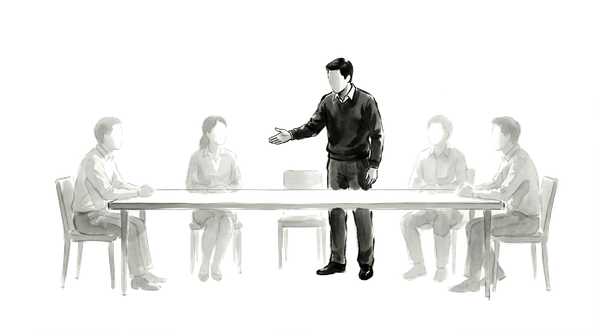
That sounds a little woo, so let me make it concrete. When your manager walks into a room anxious and rushed, you feel it before they say a single word. Their tone, their pacing, the way they glance at their phone mid-sentence. Your body picks it up and responds. There's a real mechanism here, and it routes straight back to the predictive brain. Nervous systems regulate each other because they're constantly predicting and managing each other's body budgets, the brain's running forecast of the energy a situation is about to demand. Your brain reads the leader's tone and posture as data about how much threat is coming, and adjusts your own arousal to match the forecast. (This often gets called "limbic resonance," a catchy term from popular science; the better-grounded version is co-regulation through shared prediction and allostasis.) Either way, the leader's state isn't just their own business. It's an input to everyone else's body budget.
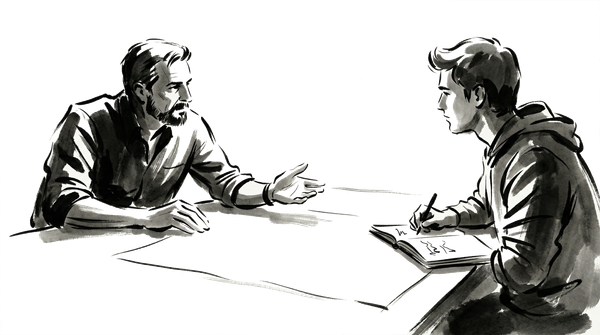
Traditional leadership culture doesn't really account for this. The old model is about control, decisiveness, knowing the answer before anyone else in the room. And those traits can work, up to a point. But they're also ego-driven, and ego-driven leadership has a ceiling. Over-assertiveness shuts down the team's creativity. Premature certainty prevents learning. You've probably worked for someone like this. The meetings feel tense. People say what they think the boss wants to hear. Nothing surprising ever gets surfaced.
Daniel Goleman's emotional intelligence framework offered an alternative back in the '90s: self-awareness, self-regulation, empathy, motivation, social skill. Good stuff. But what conscious leadership asks is something deeper than a skill set. It's less about managing your emotions and more about inhabiting a kind of steady awareness, even when things are hard.
From a Buddhist perspective, when a leader operates from that kind of presence, the whole hierarchy starts to shift. The question stops being "how do I get results through these people?" and becomes "what's getting in the way of this team's best thinking?" Authority becomes stewardship. You stop trying to control the system and start trying to clear the path for it.
The things that support this are genuinely simple, if not easy, and they work for reasons the mechanism makes clear. Two slow exhales (longer out than in) before a hard meeting nudge the body toward the parasympathetic side, lowering the threat forecast you're about to broadcast. Keeping some attention on the physical sensations in your body during a tense conversation feeds in real interoceptive data, which keeps you anchored in the present instead of running an old pattern. And when feedback stings and you feel that contraction in your chest, noticing it without immediately acting opens a small gap between the prediction and the response. That gap is where conscious leadership actually lives.
Empathy shifts too. Most people think of empathy as absorbing someone else's distress, feeling what they feel. That's actually not that useful in a leadership context; it tends toward overwhelm. What works better is a quality Buddhism calls upekkha, equanimity: staying genuinely present with someone's difficulty without losing your own center. You're witnessing, not merging. That distinction matters a lot when someone is in crisis and needs you steady, not also falling apart.
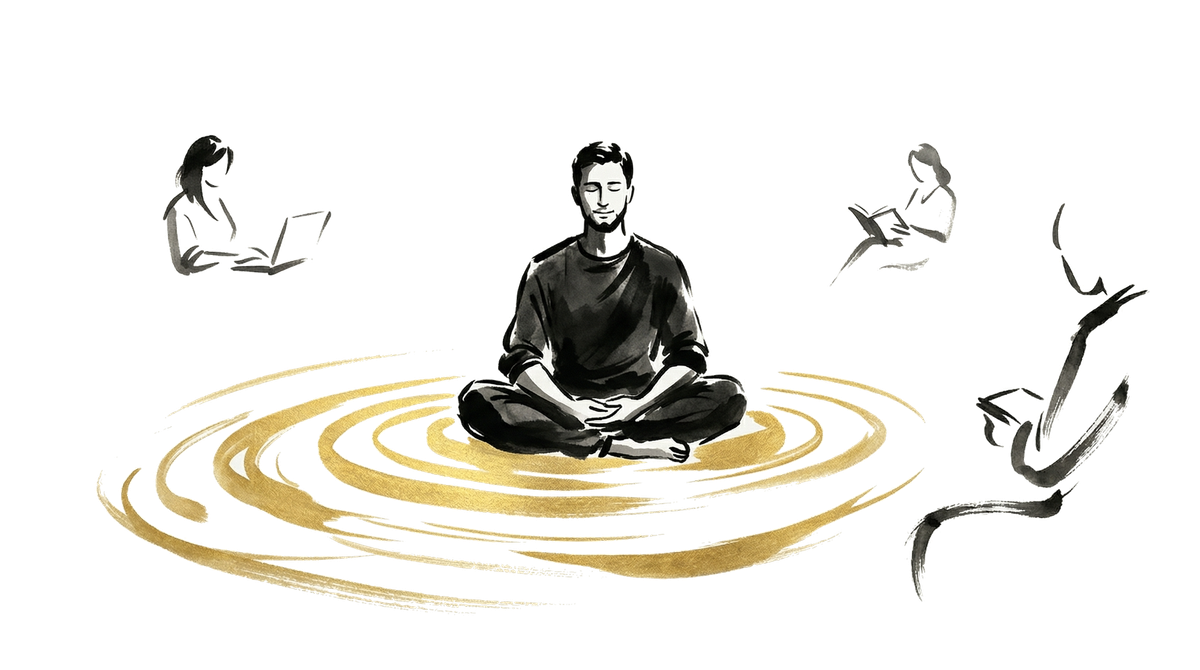
The science and the contemplative traditions are pointing at the same thing here: a calm, self-aware person in the room changes the room. The organization stops being a machine to manage and becomes something closer to a living system that can actually think.
Conscious leadership isn't an achievement you unlock. It's a practice, moment by moment. And its results show up not just in productivity numbers but in something harder to measure: whether people leave work feeling like they were treated with dignity.
That's worth practicing for.