Your Coworkers Are Mirrors (And You Won't Like What They Reflect)
The colleague who drives you absolutely crazy might be the most useful mirror you have at work. What irritates you most in others is often pointing directly at something you haven't dealt with in yourself.

"It's not you, it's me." We use that line to end relationships, usually as a soft lie to avoid a harder conversation. But at work, it might be the most accurate thing you can say.
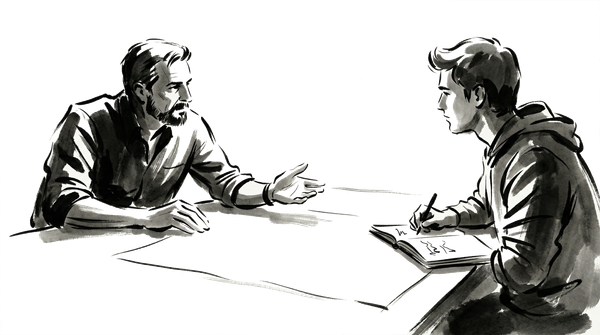
Think about the person at work who drives you absolutely crazy. Maybe it's the manager who micromanages every email. The teammate who always seems checked out. The colleague who agrees with everything in the meeting and then complains about it in the hallway.
Here's an uncomfortable question: what if that irritation is actually about you?
Not in a blame-y way. More in a "your brain is doing something fascinating and weird" way.
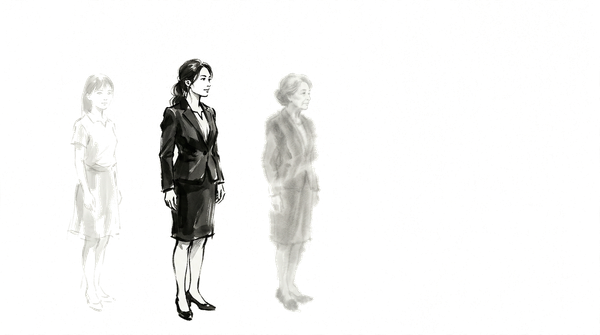
Psychology has an old name for part of what's happening: projection. When you've got a feeling that's uncomfortable to own, the mind quietly relocates it. Instead of sitting with "I sometimes feel out of control," you start noticing how controlling your manager is. Instead of owning your own passive aggression, you're suddenly very aware of everyone else's. The feeling still exists; it just gets a new address. Fair to flag that projection is a psychoanalytic idea and the evidence for it as a clean, discrete mechanism is debated, but as a description of a pattern most of us recognize, it earns its keep.
Carl Jung called the collection of these disowned parts the "shadow." Despite the dramatic name, the shadow isn't necessarily sinister, it's just the stuff you've filed under "not me." At work it tends to surface in feedback loops. The team lead who feels undervalued starts reading neutral silence as disrespect. The person with complicated feelings about authority starts experiencing every deadline as oppression. The situation hasn't changed; the emotional filter it's being seen through has.
That "emotional filter" isn't only a metaphor, and this is where the better-evidenced idea comes in. Affective realism is the finding that your current affective state shapes what you literally perceive, when you're already on edge, a neutral face reads as hostile, an ambiguous email reads as a dig. So the irritating colleague isn't necessarily doing the thing you see them doing; your state is part of what builds the perception. That's a sturdier backbone for "they're a mirror" than the shadow story is, because it points at a measured effect rather than a metaphor.
This is also why communication workshops and conflict resolution training often don't stick. The techniques are fine, but they don't address the underlying pattern. The pattern just shows up again with different people and a slightly different script.
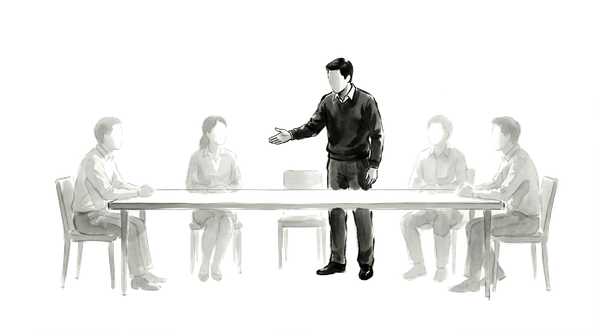
There's a second mechanism here, and it's a different thing from projection, easy to run them together, but they're not the same. Human nervous systems influence each other's states: when one person in a room is anxious or defensive, others tend to pick it up and attune, often without noticing. This goes by labels like emotional contagion and physiological synchrony in the research, and got popularized as "limbic resonance" (a coinage from the book A General Theory of Love, not an established research term, worth saying plainly). The underlying effect is real; the catchy name oversells how settled the science is. Either way, the tension in a meeting isn't always about the agenda item. Sometimes it's one person's unregulated state spreading through the room.
This is also why de-escalation often starts with the most-regulated person in the room rather than with the disputed agenda item. Because states spread, a drop in one person's arousal shifts the affective tone everyone else is reading, so regulating yourself isn't just a personal coping move, it changes the shared signal in the room.
This is where mindfulness turns out to be relational, not just a stress-relief thing. The shift it points at is from "why are they like this?" to "what in me is getting activated?", and that shift has a mechanism behind it. Putting your own affective state into words (what researchers call affect labeling) tends to take some heat out of it, and a cooler state changes what you perceive, which loops back to affective realism: own the emotion and the other person stops looking quite so much like a problem, partly because your state was shaping how they looked in the first place.
Teams that treat conflict as diagnostic information rather than a sign that someone needs correcting tend to be genuinely different to work in. A leader who can say "that comment hit a nerve and I'm noticing why" reads as trustworthy, not weak.
The difficult colleagues don't go away. But they start to look less like obstacles and more like data, and what you resist most in them is often pointing at something worth understanding in yourself. Frustrating to hear, and also one of the more genuinely useful things hiding in an ordinary workweek.