You're Not Actually Fighting Your Coworker. You're Fighting Yourself.
Most workplace conflict isn't really about the other person. It's about a story your brain is telling you, and that story has a very specific structure: me versus them.
Here's something that sounds a little out there but is actually pretty well-supported by neuroscience: most workplace conflict isn't really about the other person. It's about a story your brain is telling you, and that story has a very specific structure. It goes: me versus them.
Your brain does this automatically. It's not a character flaw; it's a feature. The mind is basically a prediction machine, constantly sorting experience into categories to make sense of a chaotic world. Me, not-me. Right, wrong. My idea, their idea. These categories form fast and feel totally real. And once they form, your emotions lock onto them. When your idea wins, you feel good. When it gets shot down, something in you contracts like you just lost a fight.
That's dualism, and it's running in the background of pretty much every tense meeting you've ever sat through.
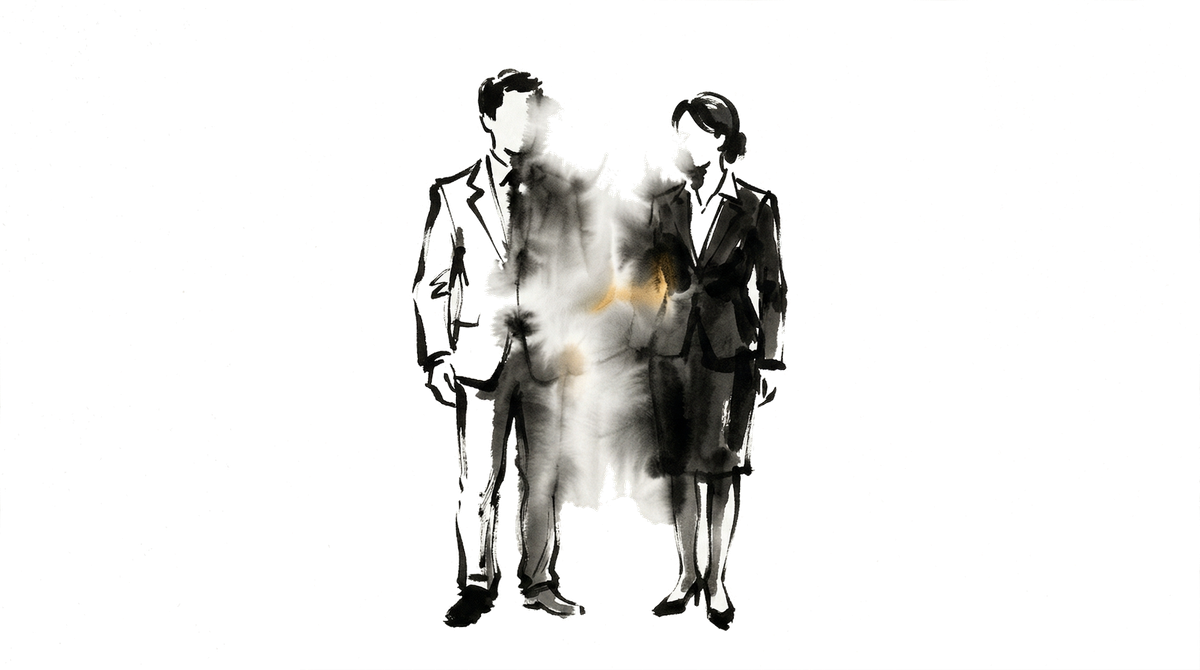
The exhausting part is that this pattern doesn't actually serve you. Your nervous system swings between defending and recovering, defending and recovering. Neuroscientist Robin Carhart-Harris's research on the brain's "entropic" states suggests something interesting: when the rigid self-model relaxes (which happens in meditation, and yes, in psychedelic states too), people don't feel lost or detached. They feel more connected. The hard boundary between self and other softens, and suddenly other people don't feel like threats.
Buddhist and Taoist traditions have been making this same point for a few thousand years, just without the fMRI data. The boundary between you and everyone else isn't a fact about the world; it's a mental construction. A useful one, sure, but not the whole picture.
So what does this actually look like in a Tuesday afternoon meeting?
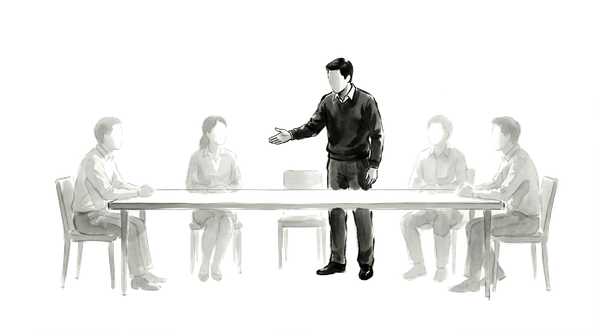
Picture two departments arguing over quarterly priorities. Each side is convinced it's right. The whole thing feels like a tug-of-war because it is one, and both teams built the rope themselves. The assumption underneath all of it is binary: for one perspective to win, the other has to lose. But both perspectives are probably capturing something real about a shared problem. The conflict isn't the presence of different views; it's the belief that those views have to be in opposition.
When people stop needing to win the conversation, they can actually have it.
There's a small practice worth trying. Next time you feel that flash of irritation toward a colleague, pause for two seconds and notice the thought: "They're wrong." Then ask yourself a quieter question: "What in me needs to be right right now?" That's not a therapy exercise; it's just directing attention inward instead of outward. The charge usually drops a little, because you've interrupted the story before it fully runs.
None of this means pretending everyone agrees or that conflict is bad. Tension between different perspectives is actually how good ideas get stress-tested. The difference is whether that tension feels like combat or collaboration.
Teams that make this shift tend to stop spending energy defending turf and start spending it on the actual work. Which, as it turns out, is the whole point.