The Emotion You're Feeling Was Built, Not Born
The emotions you feel aren't hardwired into you, your brain is building each one on the fly, every single time, from ambiguous body signals, past experience, and whatever mood you woke up in. You're not discovering your feelings. You're manufacturing them.
The emotions you feel aren't hardwired into you. They're not waiting in your brain like files in a folder, ready to pop open when the right thing happens. According to neuroscientist Lisa Feldman Barrett, your brain is actually building each emotion on the fly, every single time, using whatever raw materials it has available. You're not discovering your feelings. You're manufacturing them.
This is the core idea behind Barrett's Theory of Constructed Emotion, which she laid out in her 2017 book How Emotions Are Made. It sounds wild, but the science behind it is serious, and it fundamentally changes how you think about what's happening inside you.
The Old Story Doesn't Hold Up
For most of the last century, scientists assumed emotions were basically universal and biological. The idea, pushed hard by psychologist Paul Ekman, was that fear, anger, sadness, and happiness each had their own dedicated circuit in the brain, their own physical signature, and a facial expression anyone on earth could recognize. Like a smoke detector wired to go off at a specific temperature, each emotion had its trigger and its response.
The problem is that when researchers actually went looking for those dedicated circuits, they couldn't find them. Brain scans don't show a consistent "fear region" that lights up for fear and nothing else. Facial expressions read differently across cultures than Ekman claimed. The clean, predictable biology just isn't there.
Your Body Is Sending You Static
What your body is always producing is something researchers call core affect. Think of it as a constant low-level signal along two axes: how good or bad you feel, and how activated or calm you are. Your heart rate, muscle tension, the vague buzz of alertness or fatigue: this is your body talking, all the time. But here's the thing: that signal is genuinely ambiguous. A racing heart doesn't come with a label.
Your brain's job is to interpret that static and figure out what's going on. It does this by pulling from memory, scanning your surroundings, and using every concept it's ever learned about emotions to make its best guess. The result of that guess is what you experience as an emotion.
The Bridge That Made Men Fall in Love
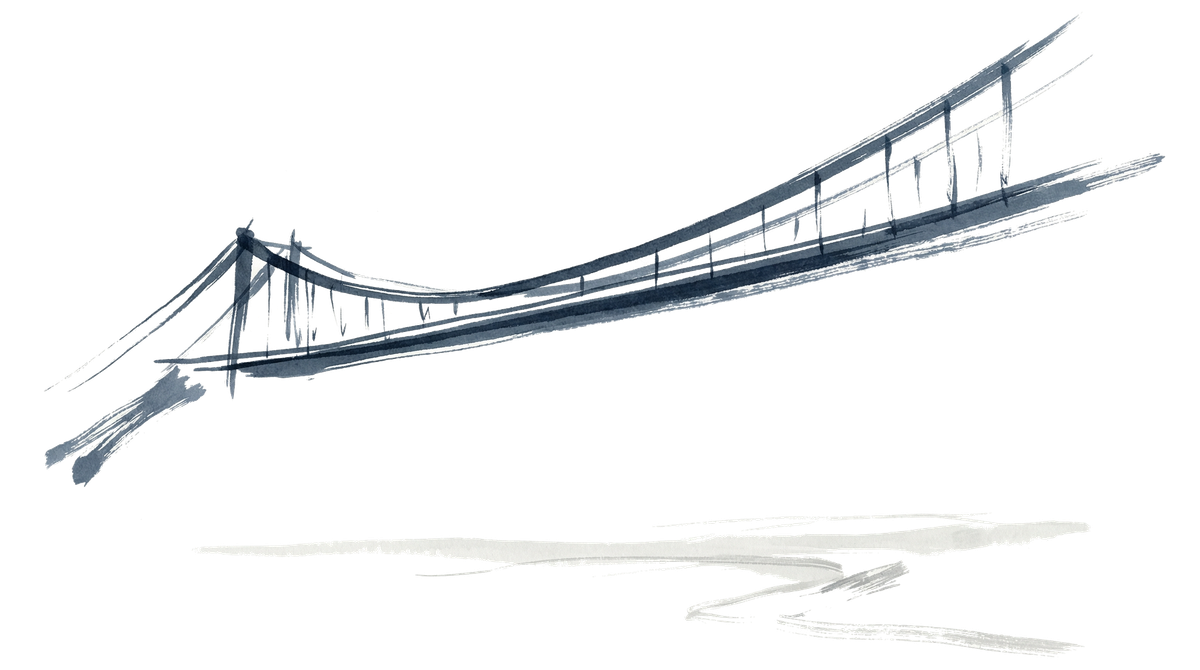
The best proof of this comes from a famous 1974 experiment by psychologists Donald Dutton and Arthur Aron. They had an attractive woman approach men on two different bridges in British Columbia, one a solid, boring wooden bridge, the other a narrow, swaying suspension bridge hanging 230 feet above a canyon.
After the encounter, the men who'd crossed the scary bridge were way more likely to call the woman and reported being more attracted to her. What happened? Crossing a terrifying bridge gets your heart pounding and your palms sweating, the same physical state your body produces when you're attracted to someone. The men's brains needed to make sense of all that activation, the woman was right there, and so the brain did what it always does: it made a story. It called the feeling attraction.
Same racing heart. Completely different emotion. Because the emotion wasn't in the heartbeat, it was in the interpretation.
You Have More Control Than You Think
None of this means your emotions aren't real. They absolutely are, and they affect everything you do. But if emotions are constructed rather than fixed, that means you have some say in how they get built. Barrett's research shows that people with a richer emotional vocabulary, who can tell the difference between, say, anxious and overwhelmed, or proud and relieved, actually experience and regulate their emotions more effectively.
The emotions you feel are real. They're just not inevitable.