The Hidden Cost of Unfelt Feelings at Work
Your workplace runs an emotional economy in the background whether anyone names it or not. Suppressing what's there isn't free, it carries a real cost and it leaks anyway, and the one move with solid support is also the least dramatic.
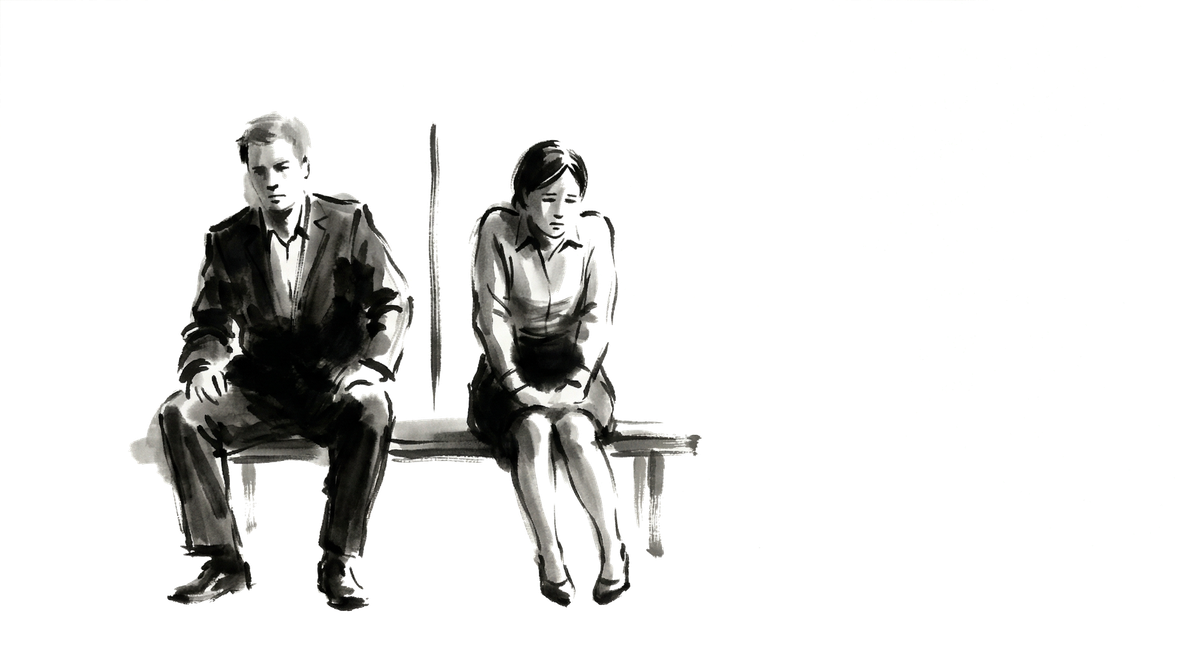
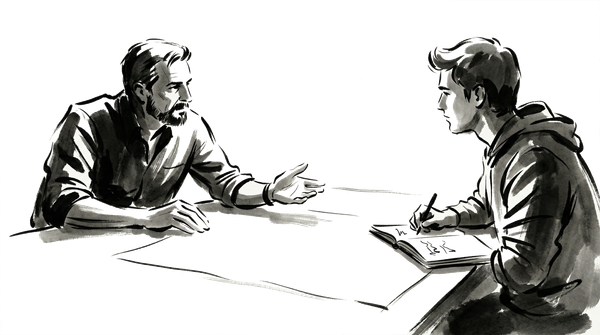
Here's something most companies don't talk about: your workplace has an emotional economy running in the background, 24/7, whether anyone acknowledges it or not. Every meeting, every email, every performance review carries a charge underneath it. Expectation. Fear. Resentment. Pride. And when those feelings don't get acknowledged, they don't just go away. They pile up. Eventually, all that accumulated, unprocessed emotion becomes the actual driver of conflict at work, quietly eating away at trust and collaboration.
Corporate culture loves the idea of the rational professional. Calm, composed, objective. "Leave your feelings at the door." We've all heard it. But pushing a feeling down isn't the same as being neutral. There's decent evidence it has a cost: James Gross's research on expressive suppression finds that clamping down on a feeling tends to raise your physiological arousal, not lower it, and leaves you remembering the moment less well afterward. So the calm exterior isn't free, it's running a tab in the background. And some of what you're suppressing tends to leak anyway, through tone and posture. When your manager's voice goes tight, or a colleague goes quiet after some hard feedback, people in the room usually pick up that something's off, even if nobody can name it. (How much we read each other this way is its own debated literature, emotional contagion, but the basic leakage is real enough.)
The damage compounds over time. Swallowed anger curdles into cynicism. Unacknowledged sadness shows up as checked-out employees. Anxiety masked as control turns managers into micromanagers. Teams get caught in these invisible feedback loops where one person's defensiveness triggers another's frustration, which makes the first person feel even more threatened. The productivity numbers only capture the wreckage: missed deadlines, high turnover, a culture where everybody's guarded. None of this proves emotional misalignment is the root cause of turnover, that'd be overstating it, but it's a real contributor that mostly goes unexamined because it never shows up on a dashboard.
It helps to be careful about what an emotion actually is here. The tempting picture is that there's a fixed feeling sitting in your body, sending a clear message you either read or ignore. The constructed-emotion view (Lisa Feldman Barrett's) says it's more that your brain is making a prediction, taking the churn from inside your body plus the situation and building the emotion out of it. Either way, the practical point holds: that churn is flagging that something matters to you, often about status, fairness, belonging, or safety. Ignore it and your brain keeps working the problem in the background, and starts reading it into new situations. A low-stakes scheduling disagreement suddenly carries the weight of every time you've ever felt dismissed or steamrolled. You'll tell yourself a tidy, rational story about the argument, but the charge underneath is older than the argument.
Buddhism offers one useful lens here: dukkha, often glossed as the friction of resisting what is (the word more broadly points at the unsatisfactoriness woven through ordinary experience). Trying to suppress a feeling is itself a kind of grasping, clinging to control, refusing the vulnerability, insisting certain feelings shouldn't exist. The alternative isn't emotional chaos. It's noticing without piling judgment on top.
This is where the one genuinely well-studied move comes in: putting the feeling into words. Researchers call it affect labeling, and in Matthew Lieberman's imaging work, quietly naming a feeling, "anger," "shame," "fear," no story attached, went along with a smaller amygdala response and more prefrontal activity. The honest version: the effect is modest and the imaging is correlational, so this isn't "name it and it dissolves." It's more that a named feeling seems to lose a little of its push on what you do next, it becomes information rather than a force steering you from the shadows. Notice that this is a description of a mechanism, not a technique you're supposed to run on a schedule.
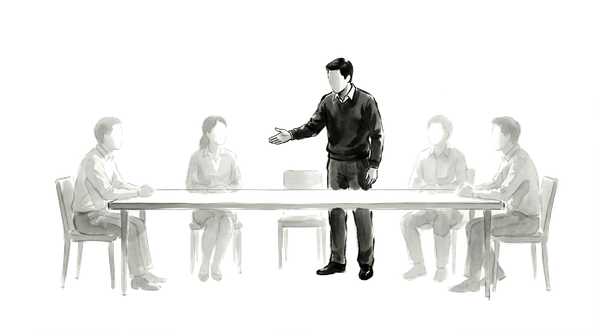
And when a lot of people in an organization can do that, treat a feeling as data instead of either broadcasting it or clamping it down, the tone of the place tends to shift. Less projecting unprocessed stuff onto each other, cleaner communication, more trust. Which is the quietly subversive part: the thing that looks like a soft, optional perk, letting people actually feel what they feel, behaves more like infrastructure.