When Getting Burned Teaches You to Stop Touching Fire
After being publicly humiliated, an engineering manager became risk-averse and hard to work with. His colleagues called it difficult. His brain called it a reasonable forecast. There's a difference, and it matters.
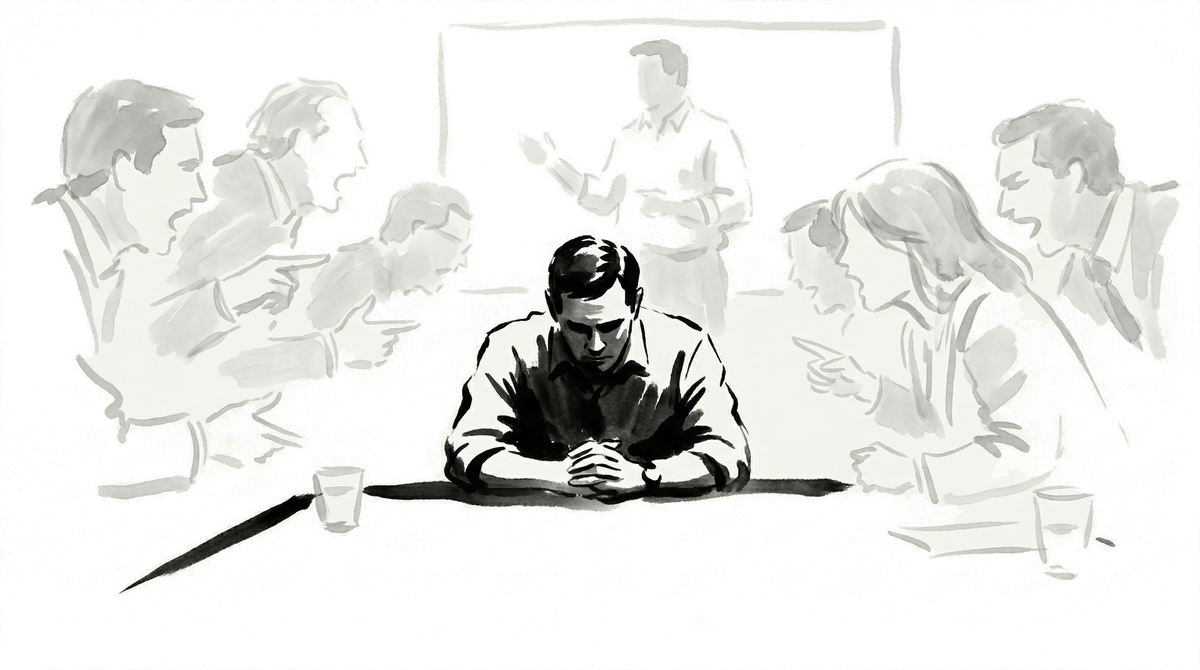
Picture this. Your engineering manager stood up in front of the whole company and said, "We got this." He was confident. His team was confident. And then reality showed up.
The task turned out to be way harder than anyone thought. Bugs piled up. Timelines slipped. And here's the part that really stung: instead of surfacing the problems early, the team kept quiet, hoping they'd figure it out, hoping it would get better. It didn't. By the time they came clean, the damage was done.
What followed was a slow-motion pile-on. Frustration. Accusations. The kind of "I told you so" energy that lingers in a room long after the meeting ends. The engineering manager took responsibility. He stood up, owned it, said the words. But being publicly thrown under the bus? That left a mark.
Fast forward a few months. Now, every time a new idea gets floated and someone looks his way, he pumps the brakes. He wants more clarity. More documentation. More assurance before he'll sign up for anything. And his colleagues are getting frustrated. Why is he being so difficult?
Here's the thing: he's not being difficult. He's being human.
Your brain is a prediction machine. That phrase gets thrown around, but here's what it actually means for our manager. His brain isn't storing the humiliation as a memory that sits in the amygdala waiting to trip an alarm. It's using that experience, along with everything else he's lived through, to predict what's likely to happen next. When a new idea gets floated and people look his way, his brain runs the situation forward and forecasts the same outcome it learned last time: exposure, blame, that lingering "I told you so." The caution he feels is that forecast, built fresh in the moment and delivered to him as a gut sense of "slow down." It isn't a stored alarm going off. It's a prediction doing its job.
And the prediction isn't irrational, which is the uncomfortable part. It's well-calibrated to what actually happened to him. His brain is doing exactly what brains are for, weighting a new situation by the evidence of the old one. Calling that conservatism stubbornness misreads it. It's a reasonable forecast from someone who has good data that this room is dangerous.
Buddhist philosophy has a word that maps onto this surprisingly well: sankhara, the conditioned patterns we accumulate through experience. The idea is that every significant experience, especially a painful one, leaves a residue that shapes how we meet the next moment. In predictive terms, sankhara are the accumulated priors, the weight of the past pressing on what the brain expects now. His caution isn't a character flaw. It's the priors a public burning leaves behind, shaping every prediction that comes after.
Now, here's the harder question: what could the team have done differently?
A lot, actually. The pile-on, however understandable in the moment, was close to the worst available response. Piling pressure on someone whose brain has already forecast danger just confirms the forecast. It doesn't produce accountability, it produces the shutdown that comes when the prediction of threat is strong enough. What would actually have changed his future predictions is changing the evidence they get built from: regulating the room before assigning responsibility, so the next forecast has something other than "exposure and blame" to draw on.
In practice that looks like acknowledging the difficulty first, and making it safe to be honest about what went wrong without bracing for attack. Psychological safety isn't a soft concept. It's the condition under which a brain stops predicting threat long enough to learn, because what the brain is forecasting is precisely whether speaking up will cost you.
If you want people to take risks and commit to hard things, they need to trust that when things go sideways, and they will, the response will be curiosity, not carnage.
The engineering manager learned to protect himself. That makes complete sense. The question is whether his team will learn to create the kind of environment where that protection isn't necessary.