When "He Makes Me Uncomfortable" Might Be About You
Marcus gave the same blunt feedback to four engineers. Three took it in stride, one even pushed back and made it better. One is sitting in your office, upset. The discomfort is real; the interesting question is what it's tracking.
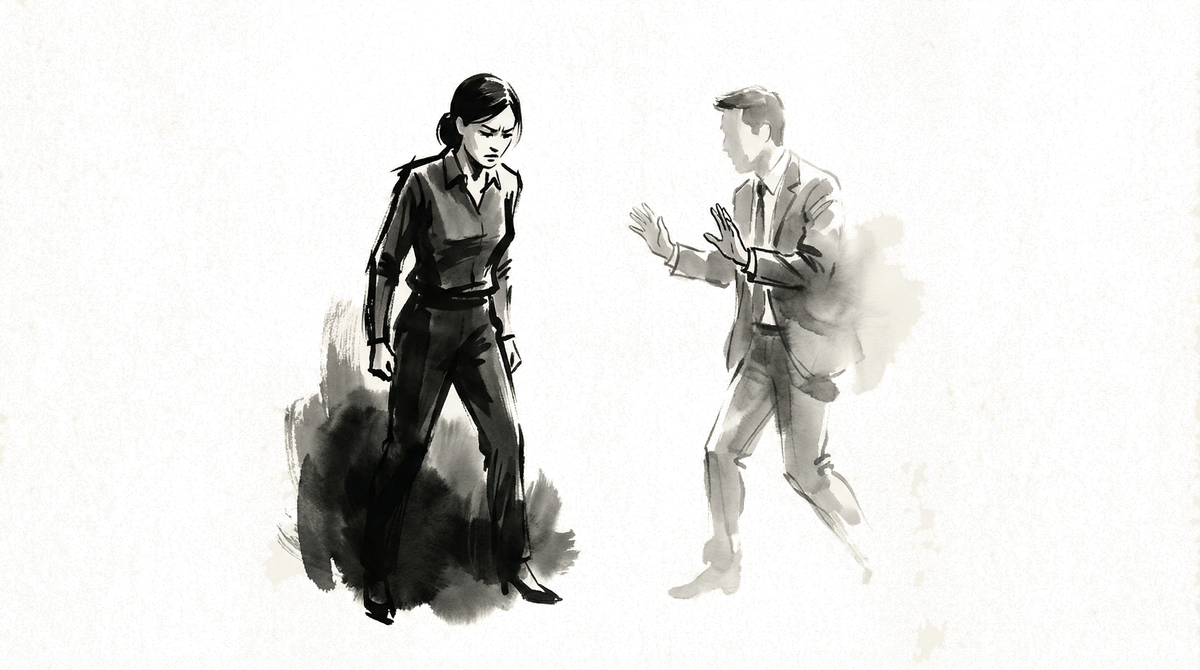
Sarah has been on your team for three years. She's smart, technically sharp, and genuinely good at her job. But lately, she's been showing up to your one-on-ones visibly stressed, and today she finally said what's been bothering her.
It's Marcus.
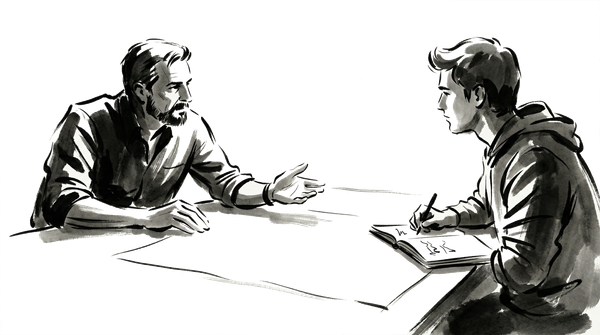
Marcus is the senior engineer on the team, the kind of guy who calls things out in real time. In last Tuesday's design review, he looked at Sarah's architecture proposal and said, directly, "This won't scale past 10,000 users. We need to rethink the data model." No sugarcoating, no preamble, no diplomatic cushion. Just: here's the problem, let's fix it.
Sarah heard it differently. She felt attacked. Humiliated, even. And now she wants Marcus to change. She's reaching for the language of psychological safety, though it's worth noting that psychological safety is about whether a team can take risks and disagree openly, which is closer to what Marcus is doing than to anything he's violating.
Here's the thing, though. Marcus gave the same feedback to three other engineers that same week. One pushed back and they got into a productive argument. Another said "good catch" and revised his design. A third shrugged and moved on. The same words produced four different experiences, which tells you the words aren't the whole story. It doesn't yet tell you what the rest of the story is. That could cut two ways, and it's worth holding both before picking one.
So what's actually going on?
When someone's bluntness lands hard, it usually isn't just about tone. What Sarah is feeling is a threat response, and the useful way to understand it isn't "her higher brain shut off." The popular story, that the rational prefrontal cortex goes offline and a primitive brain takes over, is one the science doesn't really support (it's the same dual-brain trope our constructed-emotion work pushes back on). What seems to actually happen is subtler: under a strong threat prediction, the brain commits early to a threat reading and stops sampling the alternatives. What's left is a simpler, stickier story: he's attacking me, I need to be safe, he needs to stop.
But "safe" is doing a lot of heavy lifting in that sentence. Safe from what, exactly?
That's the question worth opening, and it belongs to Sarah, not to us. We don't get to diagnose her. But these are the kinds of things someone in her position sometimes finds when they look: maybe direct criticism, growing up, meant something was deeply wrong with you. Maybe being wrong in public got coded as shameful. Maybe there's a quiet fear of not belonging in the room, and a challenge feels like confirmation. Notice that these are questions for her to investigate, not conclusions about her, the moment we assert what's in her past, we're doing the mental inference move this whole piece is warning about.
And here's where the "identical words, four reactions" comparison needs a hard caveat, because it's easy to abuse. Identical words never actually land in identical situations. If Sarah is, say, one of the few women on the team, the same sentence arrives on top of a different accumulated context, who usually gets challenged in reviews, who gets interrupted, whose competence gets quietly questioned. Her stronger reaction might not be an old wound misfiring at all. It might be a well-calibrated prediction, her brain accurately tracking a real pattern the three other engineers simply aren't subject to. The predictive brain is supposed to do exactly this: weight new events by everything that came before. A prediction built on a real asymmetry isn't a distortion to correct; it's information.
So the honest version isn't "the gap points inward." It's that a strong reaction is a prediction, and a prediction can be either of two very different things: an old, over-fitted pattern that's no longer serving her, or an accurate read of something real in the room. Both feel exactly the same from the inside, that's the hard part. The work isn't assuming it's the first one. It's that telling them apart is possible, and worth doing, because the response is different depending on the answer.
So how would Sarah tell the two apart? Not by interrogating Marcus's intent, that's unknowable and beside the point, but by examining the prediction itself. "He's attacking me" feels like a fact, but it's a prediction, and predictions are checkable. Marcus challenged her architecture; did he challenge her worth as an engineer, or did the feeling supply that part? Affective realism is the name for how a feeling arrives wearing the costume of objective fact, which is exactly why the felt certainty ("he's dismissive of me") can't be trusted as evidence on its own, in either direction. Seeing the costume doesn't tell her the threat is fake. It just makes the prediction visible enough to ask what it's actually built on: this interaction, or a pattern, and if a pattern, an old personal one or a real present one.
The same goes for the shift from certainty about Marcus to curiosity about the reaction itself. Questions like what am I actually afraid of here? what would it mean if Marcus is right? have I felt this exact thing before, with other people? aren't a self-improvement assignment. They're how you probe a prediction. (On the predictive-processing account, anyway, this is a useful framework for what's happening, not a settled fact about the wiring.) If the fear keeps showing up across many situations and people, that points one way: an old prediction over-fitting the present. If it shows up specifically where a real pattern exists, that points the other way, and the answer there isn't "manage your reaction," it's "you're reading the room correctly, now what do you do about the room."
That's why "just ask Marcus to soften his tone" is the tempting shortcut and usually the wrong first move, not because the reaction is illegitimate, but because it skips the step that tells you whether the problem is the prediction or the pattern. Smooth Marcus's delivery before you know which, and if it was an old prediction, the threat response just finds a new trigger; if it was a real pattern, you've papered over something that needed addressing. The goal isn't immunity to feedback or never feeling anything. It's enough distance from the first sting to ask the question underneath all of this: is this prediction tracking something real right now, or something old? That distance is the part Sarah actually has access to, which is why it's worth knowing about, whoever turns out to be right about Marcus.