Why We Love to Hate Our Manager's Decisions
When a manager makes an unpopular call, the group indignation that follows isn't a character flaw. It's your brain predicting a social threat and building righteous certainty to match, which is exactly what makes it so hard to think clearly through.
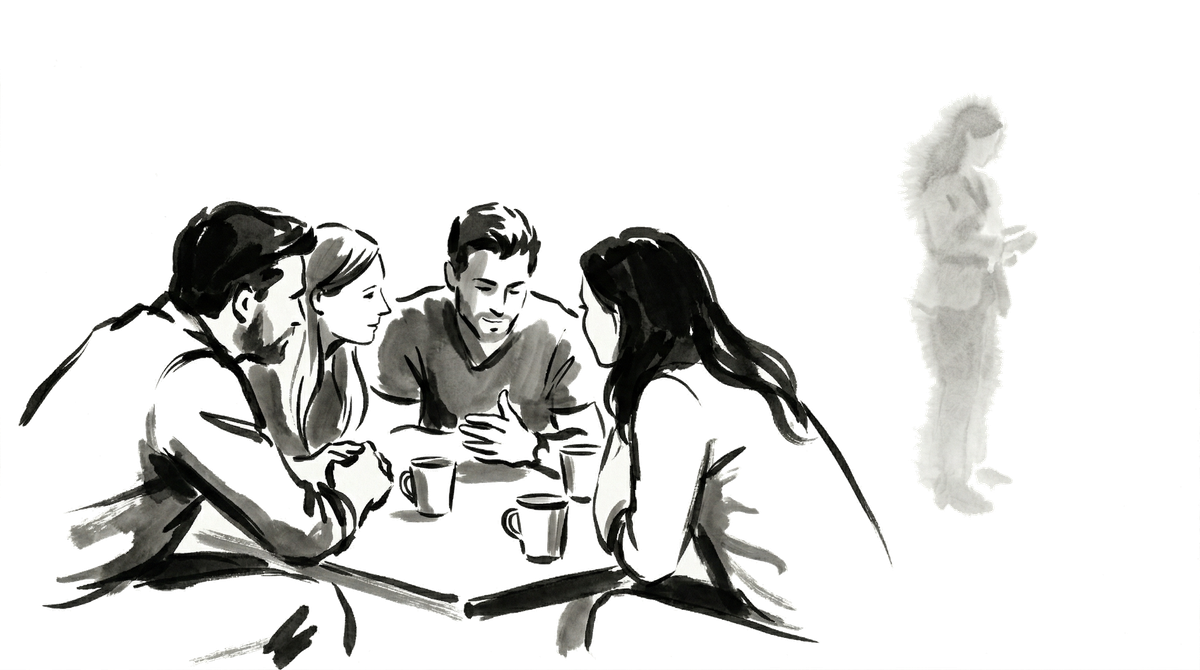
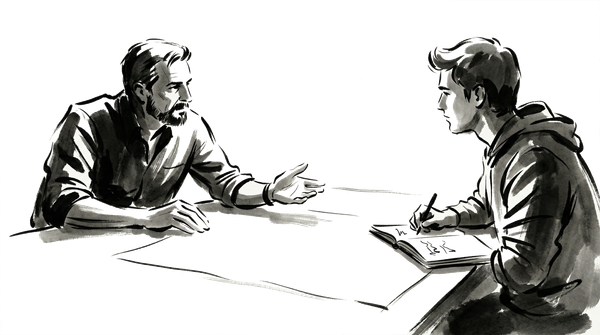
Your manager just announced something nobody likes. Maybe it's a new policy, a reorg, a process change that makes everyone's life harder. Within hours, the Slack DMs are flying. People are venting at lunch. There's a quiet chorus of "can you believe this?" And it feels... really good.
Here's the thing: that feeling isn't a bug. It's a feature, baked deep into your brain.
The tribe is safety
Tens of thousands of years ago, being cast out from your group was a death sentence. Your brain evolved to treat social belonging as a survival priority, not a nice-to-have. When you're sitting with colleagues, commiserating over a bad decision, your brain is registering something close to physical safety. The neurochemistry is real: shared grievance triggers oxytocin, the same bonding hormone released between close friends and family.
So when a manager makes a call you disagree with, and someone says "this is ridiculous, right?", agreeing with them isn't just venting. It's your nervous system doing exactly what it was designed to do: find your people and stick with them.
The threat your brain builds
Here's the part worth getting right, because the popular version ("your primitive amygdala can't tell a predator from your boss") isn't quite how it works. There isn't a primitive alarm overriding a rational brain. When the manager's decision lands, your brain predicts a social threat, a hit to your standing, your control, your sense that the org has your back, and it constructs the felt experience to match: the quickened pulse, the narrowed thinking, the fast sort of the room into us and them. The indignation isn't a raw reflex that fires and then gets reasoned about. Your brain builds it, in the moment, out of body signals plus the "us versus them" concept you already carry. That's why it arrives feeling so much like clear moral perception rather than a construction: to your brain, it isn't a story about the threat, it is the threat, rendered as feeling.
This is also affective realism at work: the state your brain has built shapes what you then perceive. Once indignation is constructed, the manager's decision genuinely looks worse, their reasoning genuinely looks thinner. You're not seeing the decision and then getting angry. The anger is part of what builds how the decision looks.
In Buddhist psychology, this maps cleanly to what's called the "second arrow." The first arrow is the difficult situation itself. The second arrow is the indignation, the certainty that you're right, the moral framing your brain constructs on top of it. The second arrow almost always hurts more than the first, and unlike the first, it's the one you have some say in.
The nuance trap
Here's what's genuinely hard: understanding your manager's decision usually requires you to hold multiple things at once. The decision might be flawed and made for reasons that make sense given constraints you can't fully see. Your frustration might be valid and your read of the situation might be incomplete.
That kind of nuance asks your brain to do something cognitively expensive: override the tribal pull and extend perspective to someone who, in this moment, feels like the out-group. It's not natural. It takes actual effort.
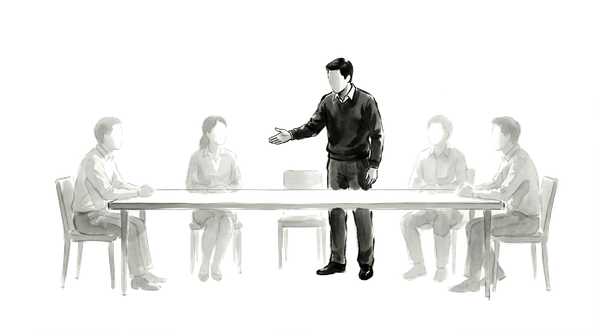
The group dynamic makes it harder. Once a few people have staked out a position, social pressure starts doing its own work. Offering a more charitable read of the manager's decision can feel like betrayal, even if you're genuinely just trying to think it through.
What changes the picture
What loosens this, when anything does, follows from the mechanism rather than from willpower.
The physical signal comes first, before the opinion does. The tight jaw and raised shoulders are part of the state your brain is building the indignation from, which is worth knowing because it means a strong opinion formed in that moment is being built on a threat prediction, not a clear read. The conviction will feel just as righteous either way.
The "what would I have done, with their information?" question does real work for a specific reason: it forces the brain to construct a different prediction, one that includes the constraints you can't see, against the same facts. That competing construction is what makes the out-group read loosen its grip, not because you've excused anything, but because the brain now has a second model to weigh.
And indignation itself rewards a second look, because of what it tends to be covering. It's more comfortable to construct than the quieter things underneath, the fear that your voice doesn't matter, that you're not in control, that the org doesn't see you. Indignation is easier to sit with than vulnerability, which is part of why the brain reaches for it. Solidarity with colleagues is genuinely valuable. It just isn't the same thing as an accurate read of what happened, and the tribal pull makes it easy to mistake one for the other.