Your Brain Is Not a Camera
Your brain doesn't record reality, it generates a continuous prediction of it, and only bothers to update when the evidence forces a correction. What you experience as reality is, in the most precise scientific sense, a hallucination.
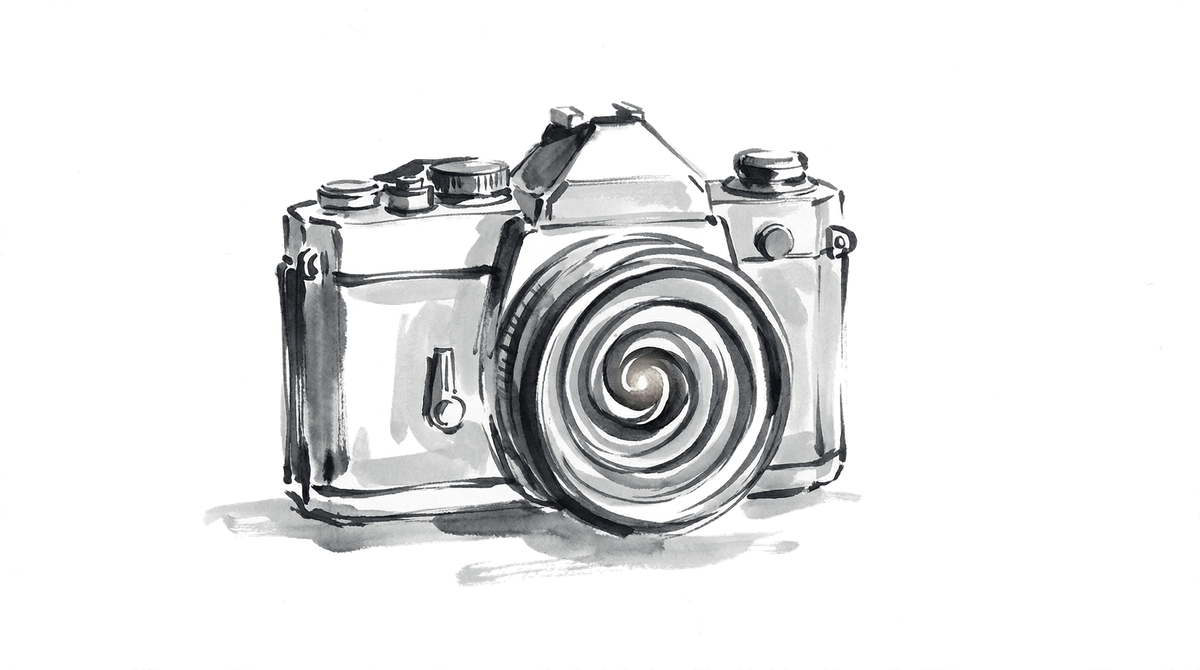
You've probably always assumed that seeing works like a camera. Light bounces off stuff, hits your eyes, and your brain reads the picture. Reality goes in, perception comes out.
That's not what's happening. Not even close.
Your brain is actually a prediction machine. And what you experience as reality is, in the most precise scientific sense of the word, a hallucination, one your brain is generating constantly and only corrects when something forces it to.
Your Brain Guesses First, Looks Second
Here's the problem your brain is quietly solving every second of your life: the information coming in through your senses is a mess. It's incomplete, blurry, and arrives late. Your eyes aren't sending your brain a crisp photograph. They're sending a rough sketch, and your brain has to reconstruct the whole scene from that.
So instead of waiting for sensory data and then figuring out what it means, your brain does something much weirder. It generates a prediction of what's out there first, and then only pays close attention to the parts where it was wrong. The gap between what it expected and what actually came in, scientists call that a prediction error, is the only part your brain really has to work hard on. Everything else is just your brain's best guess, running on autopilot.
This is called predictive processing, and it's one of the hottest frameworks in neuroscience right now. The short version: you're not perceiving the world. You're living inside your brain's current theory of the world.
The Rubber Hand That Felt Real
You can actually feel this happening to yourself, which is the wild part.
In 1998, researchers ran a now-famous experiment. A person sits at a table, one hand hidden behind a screen, with a rubber hand placed where their real hand should be. An experimenter strokes both the hidden real hand and the rubber decoy at the same time with a paintbrush. Within about a minute, most people start to feel like the rubber hand is theirs. Then the experimenter hits the rubber hand with a hammer, and people flinch. Their body thinks it just got hit.
What happened is that the brain got two matching signals: something is being touched, and I can see something being touched. It updated its model; that rubber hand must be mine. Your sense of where your body ends and the world begins is not some hard fact your brain reads off a sensor. It's an inference. A guess. And it can be tricked with a paintbrush and a piece of latex.
What Happens When the Model Breaks
About 80% of amputees experience phantom limb pain as real, often excruciating sensations in a limb that isn't there anymore. The brain's model of the body still includes the missing limb. It keeps sending signals to it. But nothing comes back. There's no prediction error, so the brain never updates. It's stuck.
Neuroscientist V.S. Ramachandran found that using a mirror to create the illusion of the missing limb moving could actually reduce the pain. The brain finally got the feedback it needed to revise its broken model and in many patients, the phantom sensations faded.
The mirror didn't fix anything physical. It just gave the brain the evidence it needed to update.
So here's where that leaves you: the richness of everything you see, hear, and feel isn't coming from out there. It's coming from inside your head, continuously generated, and only occasionally corrected by the world pushing back.
You're not watching reality. You're living inside your brain's best current guess about it.